Cell Therapy Changed Cancer Care. Now Researchers Want to Make It Work Better
Key Takeaways:
- Some cell therapies can produce remarkable results, but researchers are still working to improve their consistency and durability
- At the Cell Coast Conference, Moffitt Cancer Center convened experts from across the country to share advances in CAR T, TIL and other cell therapies
- Much of the field's current focus is on helping these treatments work in more patients and against solid tumors
For some cancer patients, cell therapy has changed what's possible.
Treatments such as chimeric antigen receptor T-cell therapy, or CAR T, have helped patients with lymphoma, leukemia and multiple myeloma achieve lasting remissions, including many whose cancer continued to progress despite multiple rounds of treatment.
As researchers gathered at the Cell Coast Conference, hosted by Moffitt Cancer Center, the conversation focused less on the successes already achieved and more on the challenges that remain.
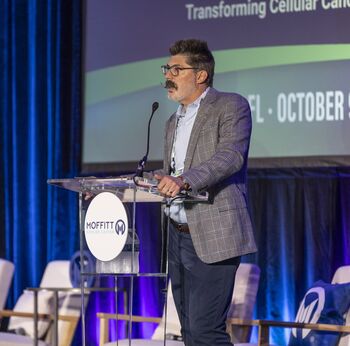
Fred Locke, MD, moderated a session on next generation cellular and T-cell directed therapies with a focus on acute lymphoblastic leukemia and peripheral T-cell lymphoma.
These therapies don't work for everyone. Some patients never respond, while others see their cancer return after an initial response. And while cell therapies have shown encouraging results in certain cancers, translating that success to solid tumors has proven far more difficult.
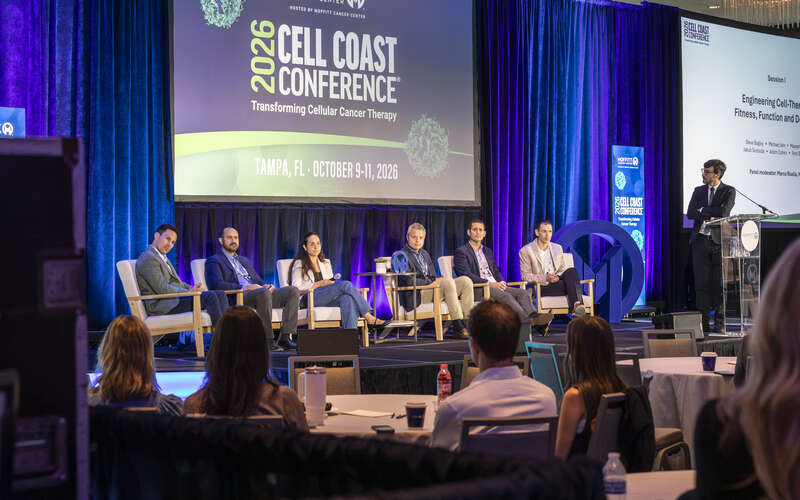
To explore those challenges, immunologists, physician-scientists and cell therapy experts from across the country came together to share research and discuss where the field is headed next, from improving the durability of CAR T-cell therapy to developing new approaches for solid tumors.
"We've reached a point where the question is no longer whether cell therapy can work," said Fred Locke, MD, chair of Moffitt’s Blood and Marrow Transplant and Cellular Immunotherapy Department. "The focus now is understanding why it works so well for some patients, why it falls short for others and how we can improve those outcomes."
Improving the Staying Power of CAR T Cells
One theme that surfaced throughout the conference was cell fitness, a term researchers use to describe how well engineered immune cells survive and function after they are infused into a patient.
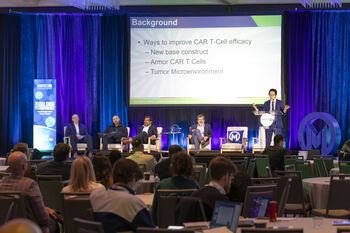
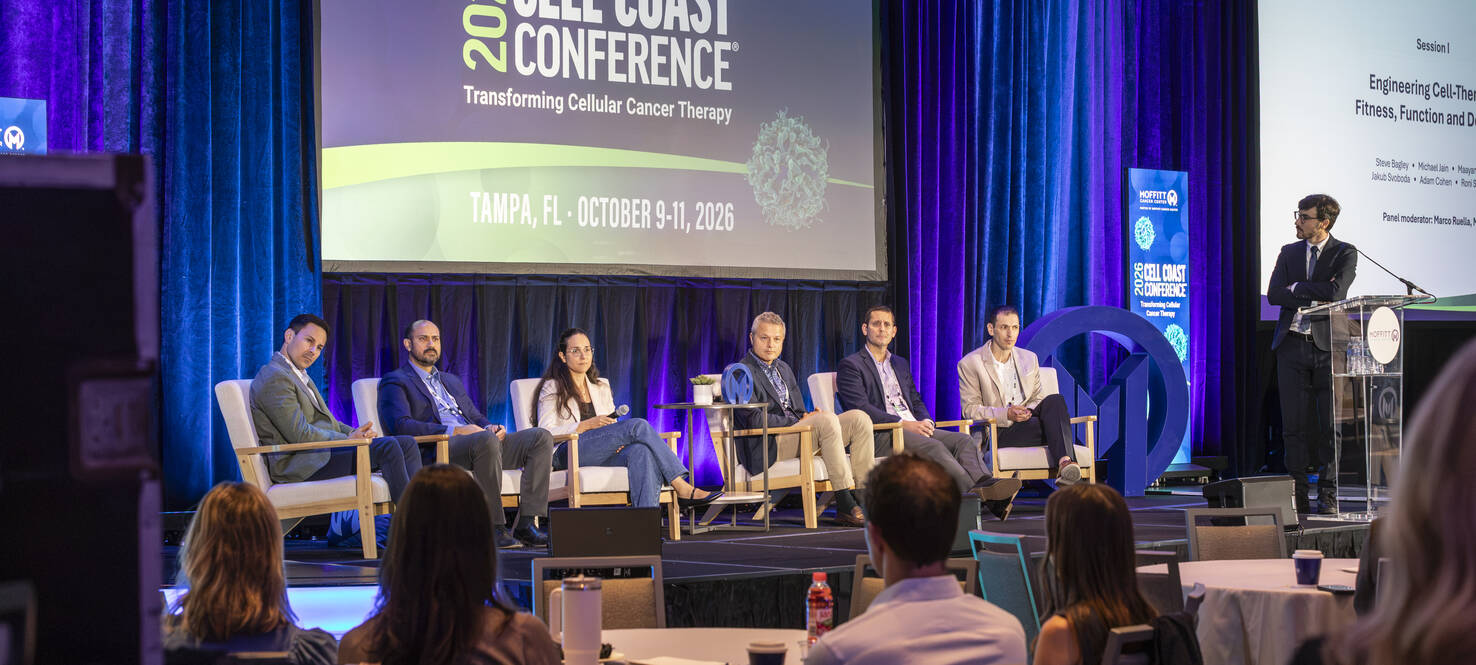
One session focused on engineering cell therapy, like CAR T, to improve cell fitness, function and delivery.
CAR T-cell therapy works by collecting a patient's T cells, genetically modifying them to recognize cancer and returning them to the body to attack tumor cells. While the approach can be highly effective, the engineered cells do not always remain active long enough to produce a lasting response.
Researchers shared findings involving cytokines, naturally occurring proteins that help regulate the immune system. Studies involving cytokines such as IL-7 and IL-18 are examining whether they can help CAR T cells survive longer, expand more effectively and maintain their activity after infusion.
Other presentations focused on reducing T cell exhaustion, a process in which immune cells gradually lose their ability to recognize and eliminate cancer cells.
"One of the biggest challenges is persistence," Locke said. "If we can help these engineered cells survive longer and remain active longer, there's an opportunity to improve outcomes for more patients."
Refining TIL Therapy
Another major topic was tumor-infiltrating lymphocyte, or TIL, therapy.
Unlike CAR T-cell therapy, TIL therapy starts with immune cells already present in a patient's tumor. Scientists collect those cells, grow them in the laboratory and return them to the patient in much larger numbers. It is FDA approved to treat metastatic melanoma.
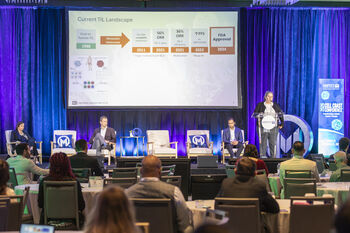
With only one TIL product approved for melanoma, presenters at the meeting discussed how to improve the cell therapy and expand it to other cancers.
"TIL therapy begins with immune cells that have already recognized a patient's cancer," said Kedar Kirtane, MD, medical director of the Solid Tumor Cell Therapy Program at Moffitt. "The question researchers are asking is how we can strengthen those cells before giving them back to the patient."
Among the approaches discussed was the use of CRISPR gene-editing technology. Scientists are studying whether editing specific genes can remove some of the biological mechanisms that limit T cell activity, allowing the cells to remain active longer and function more effectively after infusion.
"Gene editing gives us tools we didn't have just a few years ago," Kirtane said. "Researchers are looking at whether specific changes can help these cells withstand some of the signals tumors use to suppress the immune response."
The Challenge of Solid Tumors
While advances in blood cancers have helped establish cell therapy as an important treatment approach, many researchers view solid tumors as the field's biggest remaining challenge.
Solid tumors can create physical barriers that prevent immune cells from reaching their target. They can suppress immune activity and contain cancer cells that differ from one another, making it difficult for a single therapy to eliminate them all.
As a result, many of the strategies that have proven effective in blood cancers have not translated easily to cancers such as lung, breast, pancreatic and ovarian cancer.
An entire session of the conference was devoted to tackling those barriers.
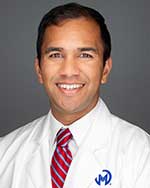
Kedar Kirtane, MD
Researchers presented studies involving next-generation T cell receptors, engineered immune cells designed to function within hostile tumor environments and therapies intended to recognize a broader range of cancer targets. Other presentations explored ways to modify the tumor microenvironment to enable therapeutic cells to remain active once they reach the tumor.
"Blood cancers helped show what cell therapy is capable of, but solid tumors present a different set of challenges," Kirtane said. "Getting immune cells to the tumor is only part of the equation. Once they're there, they have to keep functioning in an environment that's actively working against them."
Looking Ahead
Many of the ideas discussed at Cell Coast are still in development, but they reflect a broader effort to understand how cell therapies can be improved and adapted for more patients.
"No single institution is going to solve these challenges on its own," Locke said. "Meetings like this allow researchers to compare ideas, learn from one another and identify opportunities to move promising science forward."
 Medically reviewed by Kedar Kirtane, MD, Head and Neck Oncology Program