Is Proton Therapy Better for Head and Neck Cancer Patients?
Radiation therapy is commonly used to treat oropharyngeal cancers, or cancers in the soft palate, tonsils, throat and base of the tongue. However, the treatment can be challenging due to the large concentration of sensitive structures in the area, such as salivary glands and the jawbone. Radiation can cause damage and swelling that can result in long-term difficulties with eating and speaking.
Currently, most patients undergo photon radiation therapy, which uses high-energy X-ray beams to kill cancer cells by damaging their DNA.
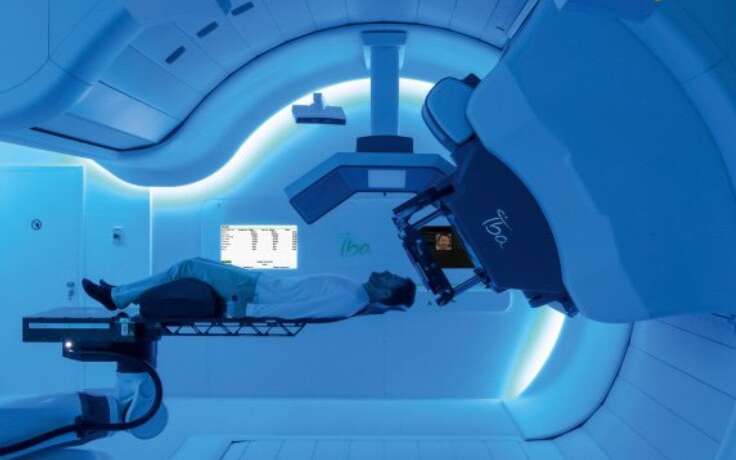
However, a study published in The Lancet found that patients who underwent proton therapy, a type of radiation that delivers proton particles to deposit energy at the tumor, had a higher overall survival rate than those who were treated with photon radiation.
Proton versus photon radiotherapy for patients with oropharyngeal cancer in the USA: a multicentre, randomised, open-label, non-inferiority phase 3 trial https://t.co/uYTYwFlWzx pic.twitter.com/QW74yzmqtT
— The Lancet (@TheLancet) January 10, 2026
Higher Survival Outcomes
The study followed 440 patients with HPV-related oropharyngeal cancers who were treated with either intensity-modulated radiation therapy (photon) or proton therapy. While progression-free survival was nearly identical between both treatment groups three and five years after treatment, five-year overall survival was higher in those who received proton therapy (90%) than intensity-modulated radiation therapy (81%). Those treated with proton therapy also reported less severe side effects, such as difficulty swallowing and feeding tube dependance.

George Yang, MD
“I think there is no clear hypothesis as to why the survival benefit at three and five years was so pronounced. That part is unclear,” said George Yang, MD, a head and neck radiation oncologist at Moffitt Cancer Center.
Photon vs. Proton
While both intensity-modulated radiation therapy and proton therapy destroy cancer cells by damaging their genetic material, the biggest difference between the two is the way they interact with tissue.
“In photon radiation, the beam deposits this energy where we want it to, based on how we modulate the beam and intensity. There’s a thing called an exit dose. So, if the target is in the middle of the throat, the back of the throat is going to get some of the dose. The physical advantage to a proton-based plan is that there’s no significant exit dose,” Yang said.
Key differences include:
Intensity-Modulated Radiation Therapy:
- Uses X-rays (photons) that pass through the tumor and beyond
- Delivers radiation to both the tumor and surrounding healthy tissue
- More likely to cause side effects
- Widely available and more commonly used
Proton Therapy:
- Uses protons that stop at a precise depth
- Delivers radiation directly to the tumor with minimal exit dose
- Better spares healthy tissues
- Associated with fewer side effects
- Less widely available
Who Will Benefit Most?
Although proton therapy offers many advantages, it is not the right fit for all patients. Photon-based radiation with or without chemotherapy is still an excellent option for many head and neck cancer patients.
“The outcomes are getting better and better all the time, primarily because we’re seeing more and more HPV-related disease, as well as the technology delivery of photon-based radiation is quite good at this point,” Yang said.
When Moffitt launches proton therapy this summer at its Speros Campus in Pasco County, head and neck radiologists like Yang will have to determine which type of radiation is best for each patient.
“I am very excited. We are going to be offering this type of treatment to the most appropriate, high-selected patients to really extract that benefit. I think the challenge for clinicians is deciding which patients will benefit the most, because not all patients will.”
Yang says although it won’t be the best treatment option for all patients, having the option for proton therapy is going to make a big difference.
“I think the ultimate compliment to a head and neck radiation oncologist is for a patient to come in to follow up years later and say, ‘I feel no different than I did before my cancer,’” Yang said. “That is the ultimate win. And protons will give us an additional tool in the toolbox to really extract those outcomes.”