Lung Cancer Screening Uncovers Life Threatening Kidney Condition
Key Takeaways:
- Routine lung cancer screenings can uncover serious health conditions, even when cancer is not detected
- A patient’s annual follow-up scan revealed kidney stones that were causing a dangerous blockage in both kidneys
- Overall, imaging can reveal unexpected medical concerns that may otherwise go undetected
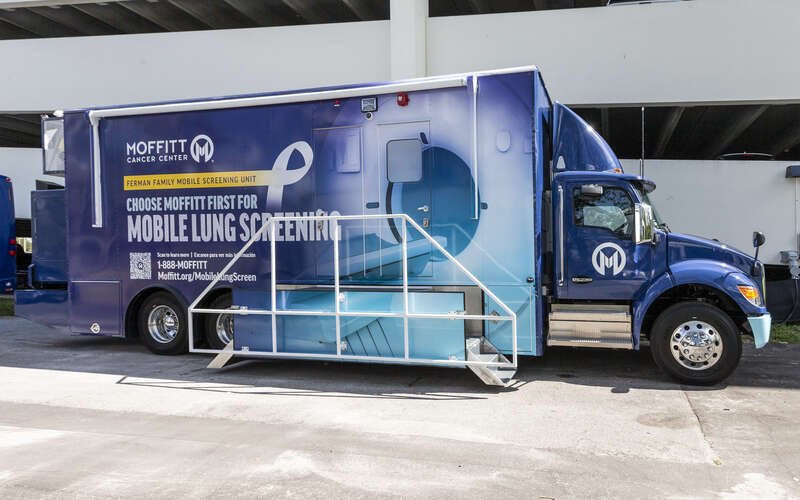
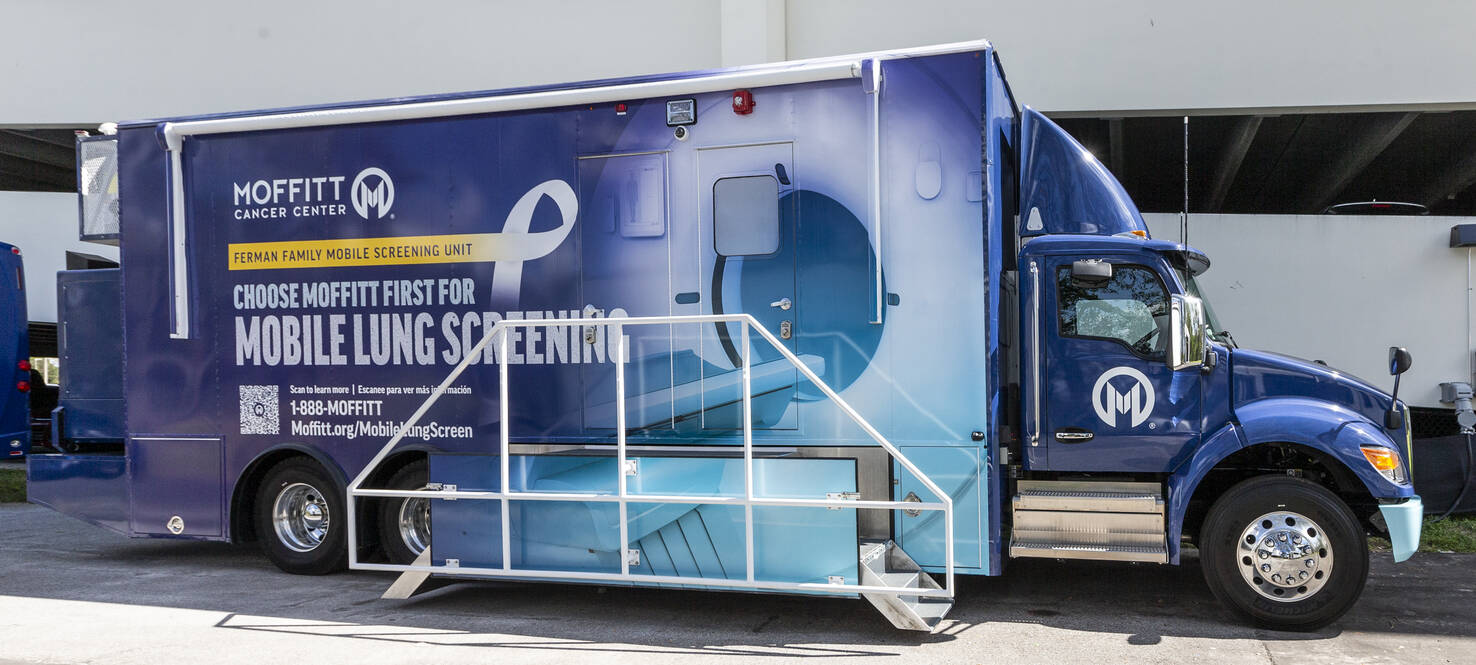
As a former smoker, 72-year-old Mary Dodds was encouraged to undergo lung cancer screening after learning that Moffitt Cancer Center was bringing its Mobile Lung Cancer Screening Unit to her community in Land O’ Lakes.
The mobile unit is equipped with a low-dose CT scanner, which can screen individuals in less than five minutes.
Dodds’s initial screening revealed lung nodules, but follow-up testing determined they were not cancerous.
“As a preventative measure, I was told I needed lung scans every year to make sure nothing was growing or looked abnormal,” Dodds said.
However, it was a routine annual follow-up scan that uncovered a potentially life threatening problem: Both of Dodds’ kidneys were failing and her blood pressure was dangerously high.
“I vividly remember I was about to head out of town for a family vacation to South Carolina and ended up having to rush to Moffitt’s Acute Cancer Care Clinic,” she said.

With a history of smoking, Mary Dodds decided to take a proactive step toward her health by undergoing lung cancer screening.
Beyond the Lungs
According to Lary Robinson, MD, director of Moffitt’s Lung Cancer Early Detection Center, chest CT scans, whether performed for screening or diagnostic purposes, generally capture images from the lower neck through at least the middle to lower portions of the kidneys.
“In this instance, we saw significant dilation of both renal drainage systems, a condition known as hydronephrosis, suggesting a blockage of the ureters,” Robinson said. “Further evaluation revealed that the hydronephrosis was caused by kidney stones in both kidneys.”
Moffitt’s urology team performed a cystoscopy and ureteroscopy, minimally invasive procedures commonly used to locate and remove kidney stones.
Dodds credits Moffitt’s multidisciplinary team with acting quickly to address the unexpected findings.
“I truly thank them for saving my life,” Dodds said. “If I had gone on vacation with all of this going on, something very serious could have happened.”
Uncovering More Than Cancer
Michelle Smith, Moffitt’s mobile screening program manager, says cancer screenings can help identify other health concerns before they become medical emergencies.
“A screening is truly never wasted, even if cancer is not found,” Smith said. “People gain peace of mind, a better understanding of their risks, and sometimes discover other health concerns that need attention, like in this case. At the end of the day, knowledge is power, and screening gives people knowledge they can act on.”
Dodds hopes her experience encourages others to prioritize their health and get screened if they meet the eligibility criteria.
“It’s better to monitor your health and stay on top of things rather than ignore something, and then it is too late,” Dodds said.
The U.S. Preventive Services Task Force currently recommends annual lung cancer screening with low-dose CT for adults ages 50 to 80 who have a 20-pack-year smoking history and currently smoke or quit within the past 15 years. A 20-pack-year history is equivalent to smoking one pack of cigarettes daily for 20 years or two packs daily for 10 years.
 Medically reviewed by Lary Robinson, MD, Thoracic Oncology Department