Moffitt Trial Tests Immunotherapy Without Chemotherapy for Early Stage Breast Cancer
Key Takeaways:
- Florida mother avoided chemotherapy through a clinical trial combining dendritic cell therapy with HER2-targeted treatment
- The experimental approach is being tested in patients with small, highly HER2-driven Stage 1 or 2 tumors
- Nearly a year after treatment, she is cancer free after undergoing surgery without chemotherapy
When 64-year-old Marlene Medina was diagnosed with Stage 1 breast cancer, she knew she didn’t want to undergo chemotherapy.
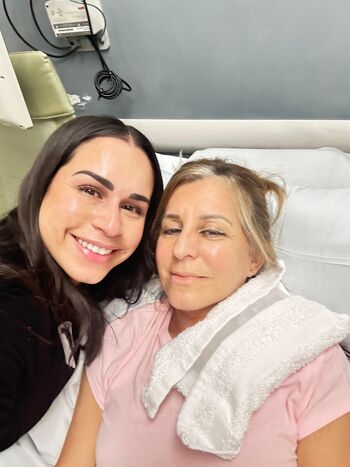
Marlene Medina relied on her daughter’s support during her breast cancer treatment.
“I didn’t want to lose my hair. My parents live in Puerto Rico, and I didn’t want them to know right away. I didn’t want my mom to be even more devastated when she saw me,” she said.
Medina was still in shock from the diagnosis that came after more than 20 years of annual mammograms.
“When they called me to give me the news, I was like are you sure you have the right patient? There is no way,” she said.
When her community oncologist told her chemotherapy was her best option, Medina went looking for a second opinion at Moffitt Cancer Center.
At her Moffitt appointment, doctors told Medina she qualified for two different clinical trials for early stage HER2-positive breast cancer. One of them offered treatment without chemotherapy.
Dendritic Cell Therapy
Dendritic cells are a special type of immune cell that highlights breast cancer cells for the immune system to attack. They are harvested from a patient’s blood and combined with HER2 proteins in the lab to recognize and target the cancer before being injected directly into the patient’s primary breast tumor.
Researchers and physicians at Moffitt have been studying dendritic cell therapy for years. It has been studied in conjunction with other therapies, including a trial investigating the efficacy of dendritic cell therapy combined with HER2-targeted therapy and a deescalated chemotherapy regimen before surgery in patients with early stage HER2-positive breast cancer.
That trial, called the NATASHA trial, found that half of patients with hormone receptor-positive disease and 83% of patients with hormone receptor-negative disease had a complete pathological response to the treatment.
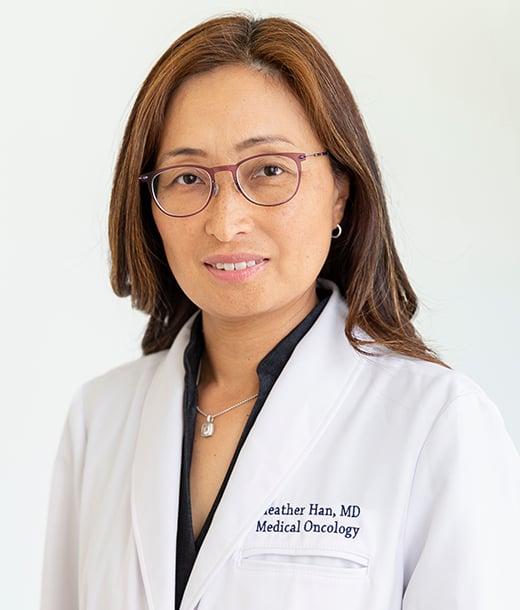
Because of the success of the trial, lead investigator Heather Han, MD, opened a trial investigating dendritic cell therapy given with HER2-targeted therapy without chemotherapy before surgery in patients with early stage HER2-positive disease.
“The most remarkable part of this trial is not giving chemotherapy for HER2-positive breast cancer. That is something that is very unusual,” Han said.
It was the trial Marlene Medina decided to try last summer.
“My daughter asked me if I wanted to be a guinea pig and I said I am trusting the trial and trusting God and am going to go for it,” she said.
Zero Chemotherapy
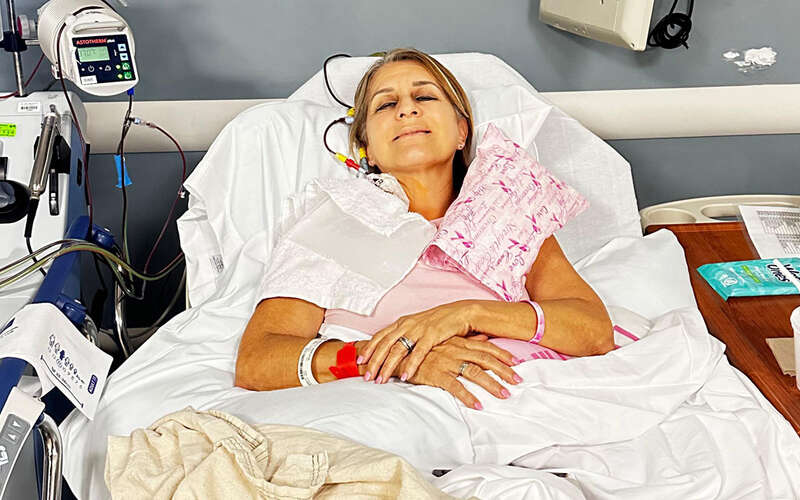
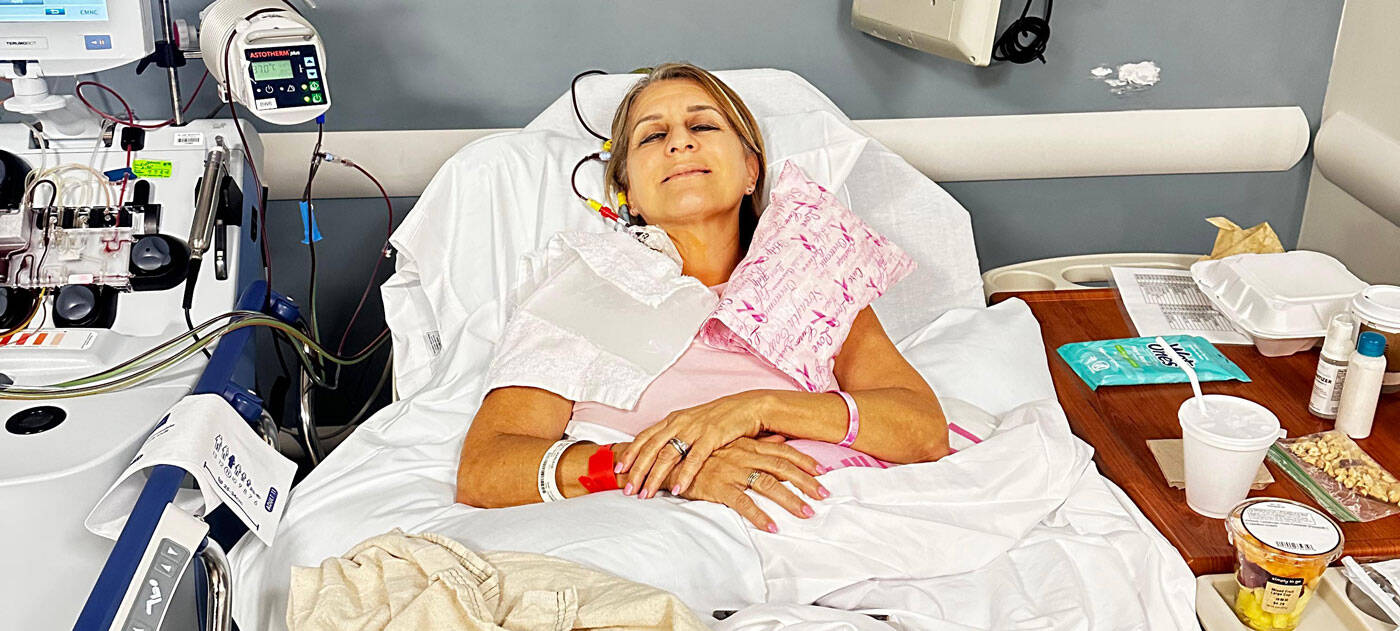
Medina’s treatment began with apheresis — a procedure that draws blood from a patient, separates and removes a specific part and returns the remaining blood to the body — to collect her dendritic cells.
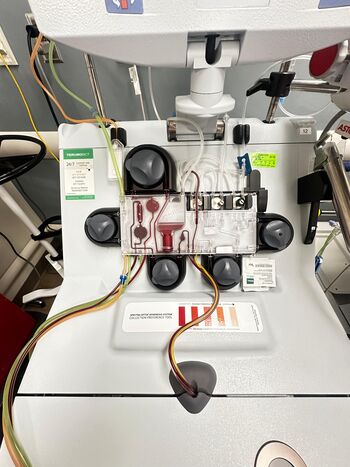
During apheresis, Medina’s dendritic cells were collected from her blood and the remaining blood was returned to her body.
Those cells were combined with HER2 proteins in the lab to create Medina’s personalized dendritic cell vaccines. She was given one vaccine a week for six weeks and received HER2-targeted therapy before and after her lumpectomy in December 2025.
“There were days when I was strong and days when I felt like heaven was coming down,” Medina said.
Despite some side effects and a hard surgery recovery, Medina stayed positive. Today, nearly a year later, she is cancer free — and never had any chemotherapy.
“In the past, you heard about everyone having chemo, so it’s crazy I didn’t,” she said.
Selecting Trial Patients
Han says other patients on the trial have also had similar responses to the treatment as Medina.
The challenge, she says, is selecting the right patients for the trial. The team is looking for patients with Stage 1 or 2 disease with tumors less than 3 centimeters. And most importantly, patients whose disease is very HER2-driven, defined as high levels of HER2 protein.
“This trial is not for every patient. Our hypothesis is that if a patient’s tumor is very HER2-driven and smaller, it is reasonable to try this approach without chemotherapy,” Han said. “If a patient still has a residual tumor at the time of or after surgery, they can always receive the standard of care chemotherapy.”
Han says she hopes to present preliminary trial data next spring.
 Medically reviewed by Heather Han, MD, Breast Oncology Department