Moving Science: Inside the Massive Effort To Bring Moffitt Research to Speros
Key Takeaways:
- The 250,000-square-foot Discovery and Innovation Center is expected to house 20 faculty labs and approximately 250 research personnel by the end of 2026
- Teams are relocating specialized scientific equipment, chemicals and irreplaceable research samples while working to minimize disruptions to ongoing research
- Flexible labs, shared technology and collaborative spaces will bring researchers from different disciplines together to accelerate discoveries and help move new ideas toward better treatments for patients
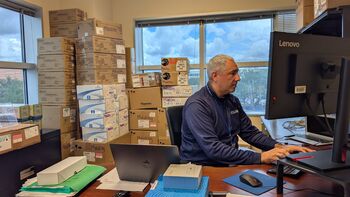
Stuart Maudsley, PhD, wraps up work in his office in the Moffitt Research Center as he prepares to move lab equipment to the new Discovery and Innovation Center at Speros.
Stuart Maudsley, PhD, knows exactly how many boxes should arrive when his laboratory moves into Moffitt Cancer Center’s new Discovery and Innovation Center at Speros: 78.
His lab members photographed them, numbered them and catalogued what is making the trip. Inside are plates and reagents used for drug screening, pieces of an active research program that cannot simply be tossed into a moving truck and unpacked at the other end.
“Hopefully there’s 78 boxes going out and we should have 78 boxes when we’re there,” Maudsley, a researcher in the Drug Discovery Department at Moffitt, said.
And that is just one laboratory.
Over the course of several months, Moffitt is relocating research labs, team members, thousands of chemicals and hundreds of pieces of scientific equipment more than 20 miles from its Magnolia campus to Speros.
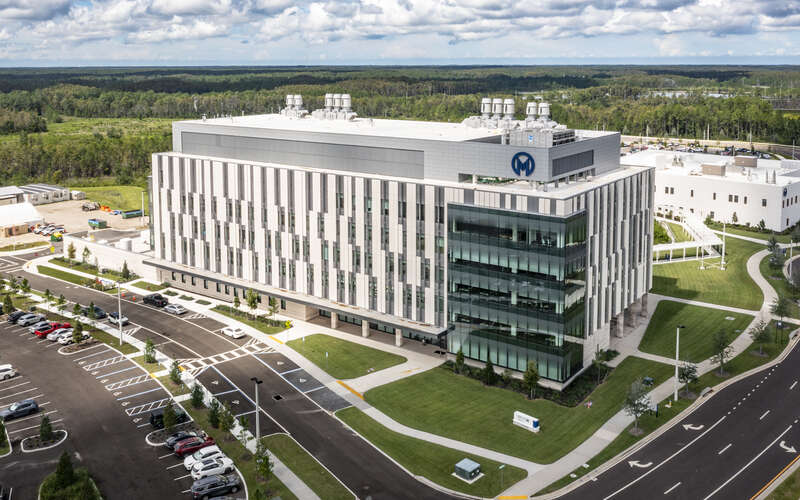
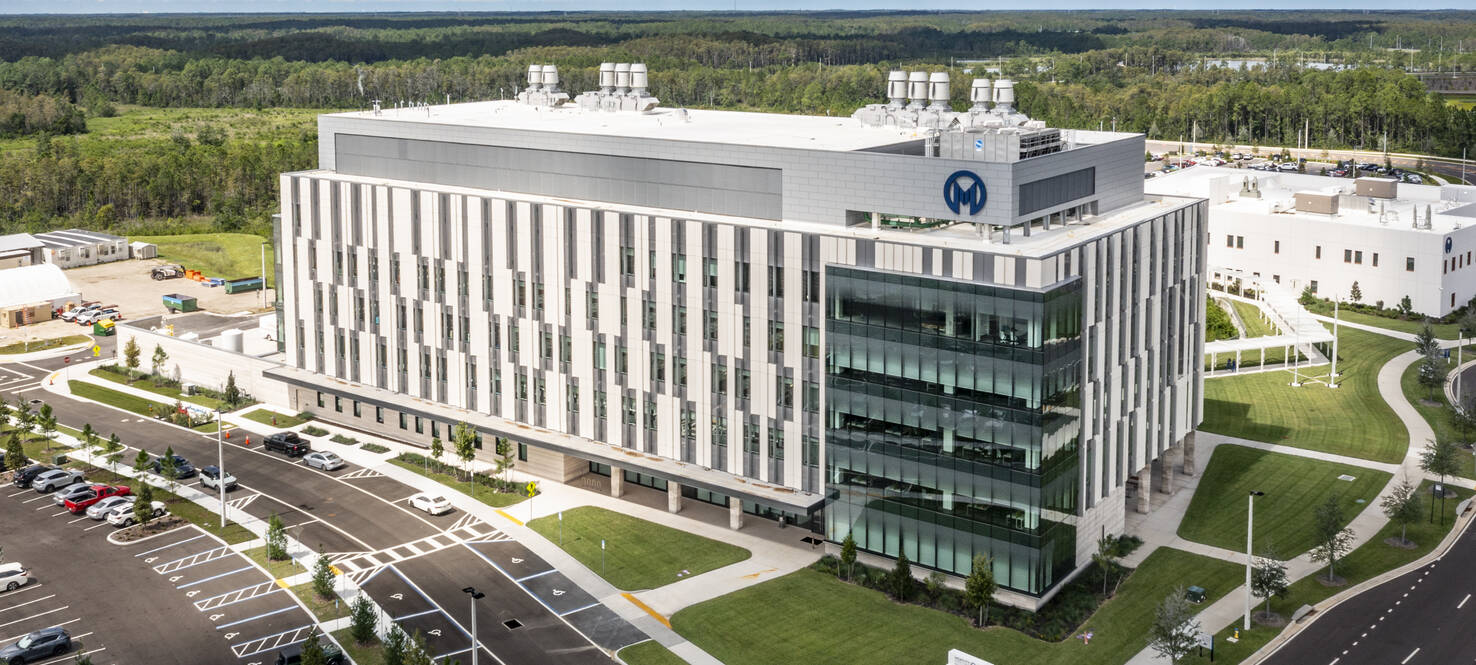
The move is part of the opening of the Moffitt Discovery and Innovation Center, or MDI, a 250,000-square-foot cancer research facility on Moffitt’s 775-acre life sciences campus in Pasco County. MDI was built as wet-lab research space at Magnolia reached capacity, providing room for Moffitt’s research enterprise to continue growing.
By the end of 2026, MDI is expected to house 20 faculty labs and approximately 250 research team members working across areas such as cancer biology, drug discovery and chemistry, bioengineering and cancer metabolism. About 60% of the building is built out, leaving capacity for future research growth and biotech collaboration.
But before researchers can take advantage of the new space, they have to get there.
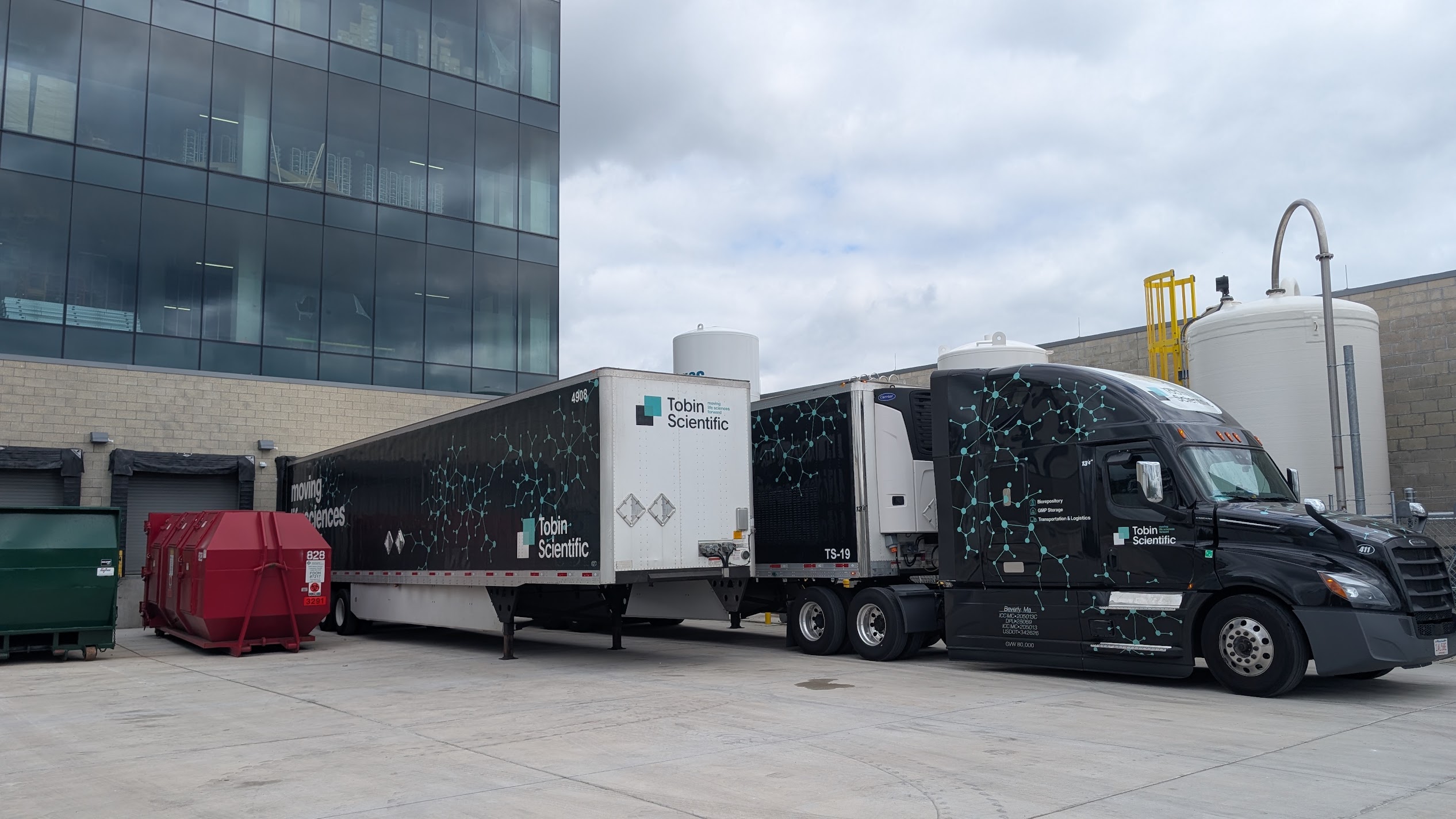
Air conditioned trucks arrive carrying temperature sensitive lab equipment.
How Do You Move a Cancer Research Lab?

John Schatzle, PhD
For John Schatzle, PhD, senior director of Laboratory Research Operations at Moffitt, the move is the culmination of roughly two years of planning.
Moving a research lab is considerably more complicated than packing up an office. Laboratories must remain operational for as long as possible before their moves, while teams simultaneously prepare years of research, chemicals, biological samples and sophisticated scientific instruments for transportation.
Planning for each lab begins weeks in advance. Teams inventory equipment, samples and cold storage, determine what will make the move and coordinate where equipment will be placed at MDI. About two weeks before moving, experiments stop and researchers turn their attention to cleaning, decontamination and packing.
Some of what is being transported cannot be replaced.
Research freezers, for example, can contain patient-derived samples and years of scientific work. Specialized transportation allows freezers to remain powered on, so their contents stay at the appropriate temperature during the journey.
Then there is the equipment.
Some specialized instruments require technicians from the original manufacturer to shut them down, disassemble and package them for transportation, then reinstall and recalibrate them at MDI.
Maudsley estimates about $2 million worth of equipment associated with his lab will be part of the transition. He even delayed purchasing some major new instruments, including mass spectrometry equipment, so they could be installed directly at MDI rather than set up at Magnolia and moved again.
Complicating matters further, the lab moves are occurring as work on the new building continues.
Schatzle described the operation as “a move wrapped inside of a construction project that’s ongoing.”
Managing all the moving pieces, he said, can feel like playing “3D chess.”
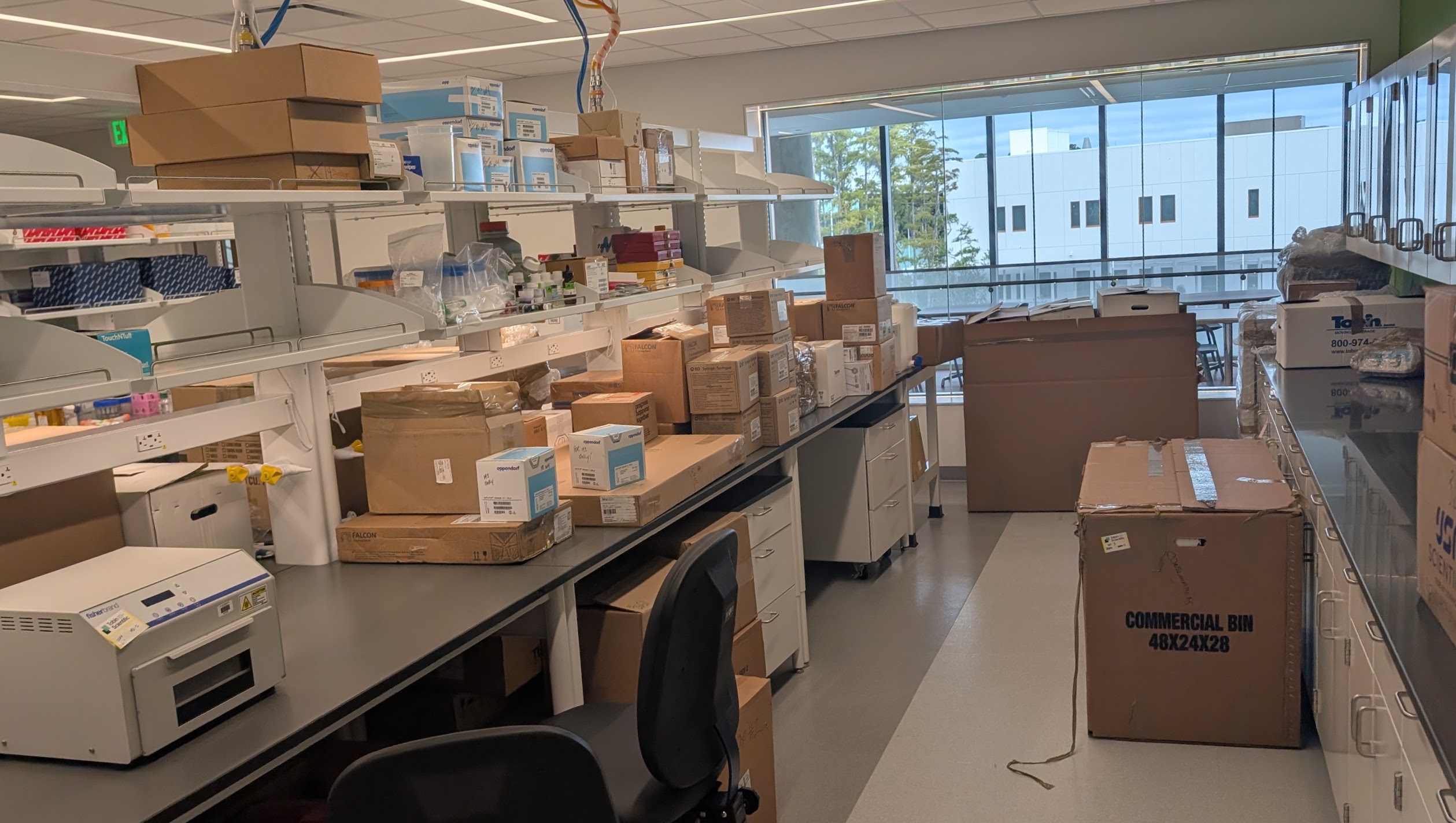
Boxes of lab equipment arrive off of moving trucks ready to be opened and set up by Moffitt researchers.
A Laboratory Designed to Change
The work does not end when the moving trucks reach Speros.
Equipment manufacturers reinstall specialty instruments, information technology teams reconnect networked equipment and safety inspections take place before laboratories return to normal operations.
What awaits researchers is a facility intentionally designed to work differently.
MDI features flexible laboratories with overhead utilities and movable benches that can be reconfigured as research needs evolve. Shared technology and equipment spaces are designed to bring scientists and specialized resources together, while collaboration areas throughout the building create places for researchers to interact outside their individual labs.
Advanced resources, including the Nikon Center of Excellence and specialized imaging, molecular and drug discovery capabilities, will support research throughout the building.
For Maudsley, those opportunities to interact may prove just as important as the new equipment.
When he arrives, his first priority will be simple: make sure all 78 boxes made it. Then he wants to see what his new neighbors are doing.
“There’s no point every lab having exactly the same thing,” Maudsley said.
Instead of each laboratory purchasing its own equipment, researchers may be able to share resources with the scientists around them.
“The whole purpose of having these places is to bump into people that you might normally not see,” he said.
Maudsley already sees opportunities to work more closely with researchers in cryo-electron microscopy and bioengineering, bringing different expertise together to tackle questions involving drug development and delivery.
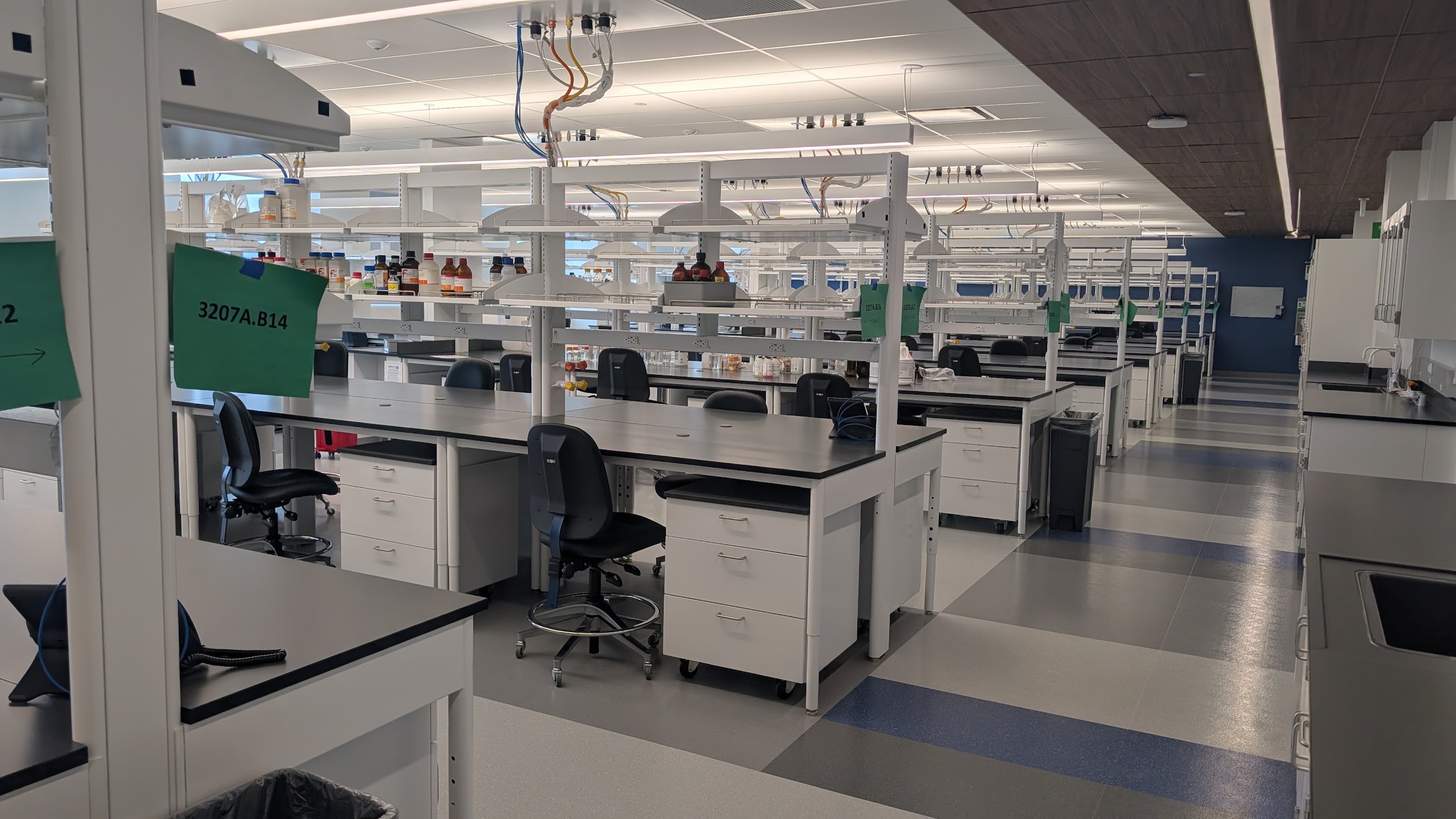
Rows of brand new lab benches await equipment deliveries as part of the four-phase moving project.
More Than a Move
Making that possible requires coordination extending far beyond the researchers themselves. Movers, equipment manufacturers, information technology, facilities, environmental health and safety teams and numerous other partners across Moffitt all play a role.
“It really takes a village,” Schatzle said.
Ultimately, the move represents more than additional laboratory space. MDI sits near the Moffitt at Speros outpatient center and Richard M. Schulze Family Foundation Proton Center, creating opportunities to connect research and patient care as the campus continues to grow.

Ed Seijo
“This is one of the most complex operational transitions an academic research enterprise can undertake,” said Ed Seijo, senior director of Translational Science and Biorepository Shared Resources at Moffitt. “Beyond the physical move, it requires aligning people, processes, equipment, infrastructure, vendors, and timelines across dozens of stakeholder groups to ensure a seamless transition into the new building.”
Seijo explained the challenge is not simply moving 20 faculty labs. It’s orchestrating the movement of people, scientific programs, hazardous materials and millions of dollars in specialized equipment through a highly coordinated process involving both internal teams and expert external partners, while keeping research moving forward.
“Fortunately, at Moffitt a large part of our overall success is that we specialize in working together."
For Maudsley, who has been thinking about the move since even before joining Moffitt, that larger potential is what makes packing up a laboratory worthwhile.
“It’s not just moving,” he said. “It’s a new thinking environment, a new place for technological and translational development and finally a huge addition to the Moffitt community.”
For now, though, the next step is a little more straightforward: unpack the boxes and get back to work.