

Never Smoked? Here’s Why Lung Cancer Still Happens
Key Takeaways:
- People who have never smoked can still develop lung cancer, with genetic mutations, family history, radon, air pollution and secondhand smoke among the contributing risk factors
- Persistent cough, coughing up blood, unexplained chest pain and shortness of breath are among the warning signs that warrant medical evaluation
- Routine CT lung cancer screening is not currently recommended for people who have never smoked but researchers are working to identify individuals who may benefit from more targeted screening
There is a common misconception that people who have never smoked are immune to lung cancer.
Although their risk is considerably lower, lung cancer in people who have never smoked remains a significant concern. News of Pope Leo’s adenocarcinoma diagnosis, the most common type of non-small cell lung cancer, has also renewed conversations about why people who have never smoked can develop the disease.
 Lary Robinson, MD, director of Moffitt Cancer Center’s Lung Cancer Early Detection Center, says several factors can contribute, including genetic mutations and exposure to air pollution, secondhand smoke and radon.
Pope Leo's diagnosis sheds light on cancer detection and risk.
“Ten percent of the men who get lung cancer now were never smokers, and 25% of the women who get lung cancers were never smokers,” Robinson said.
Other risk factors include asbestos and certain occupational carcinogens, as well as a history of certain lung diseases.
People with significant exposures or a strong family history of lung cancer should discuss their individual risk with a health care professional. Whether a CT scan is appropriate in these situations is an individualized decision, rather than a standard guideline-based screening recommendation.

Warning Signs To Watch for
Symptoms of lung cancer can include:
- Persistent or worsening cough
- Coughing up blood
- Unexplained chest pain
- Shortness of breath
- Hoarseness
- Unexplained weight loss
- Recurring pneumonia or bronchitis, or new wheezing
While these symptoms can have many possible causes and do not necessarily indicate lung cancer, persistent or unexplained symptoms should be evaluated promptly.
For someone experiencing concerning symptoms, a CT scan or other testing would be considered a diagnostic evaluation, not screening.
Screening Guidelines
-

10% to 20%
of lung cancers each year occur in neversmokers or those who have smoked fewer than 100 cigarettes
Current lung cancer screening guidelines generally do not include people who have never smoked, even though an estimated 10% to 20% of lung cancer cases in the U.S. occur in this population.
However, this does not necessarily mean that routine CT screening for every non-smoker would save more lives than it harms. Lung cancer is less common in this group, and CT scans can help identify benign lung nodules that lead to additional testing, sometimes including invasive procedures.
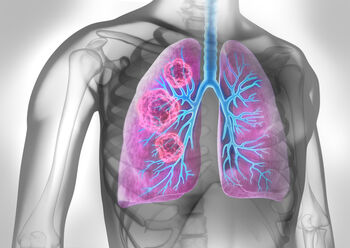
Genetics, air pollution and secondhand smoke may contribute to lung cancer.
Reducing Risk Factors
Although smoking remains the leading risk factor for lung cancer, people can take additional steps to reduce their exposure to other known risk factors.
These include testing your home for radon, avoiding workplace carcinogens and maintaining healthy habits, including a nutritious diet and exercise.
Research is underway to develop better risk-prediction approaches that could eventually identify select never-smokers who may benefit from screening.
Until researchers have stronger evidence identifying who would benefit, routine CT screening is not recommended for people who have never smoked.
 Medically reviewed by Lary Robinson, MD, Thoracic Oncology Department