Thinking Outside the Box With Adaptive Breast Cancer Clinical Trial
Key Takeaways:
- After her breast cancer diagnosis, Jenny De Furio opted to enroll in the I-SPY 2.2 adaptive clinical trial
- The trial treats patients diagnosed with stage 2 or 3 breast cancer using therapies already approved to treat later stage metastatic breast cancer or other types of diseases
- Additional testing throughout the trial allowed De Furio to see the treatment’s effects on her cancer
Jenny De Furio was at home with her son and husband when she got the call on May 7, 2024. She grabbed the closest sheet of paper, a piece of engineering paper she would typically use to sketch out diagrams, plot data points and check construction calculations.
The project she was about to tackle this time was different, though. Her inputs:
Mass shows invasive ductal carcinoma.
Under 2 centimeters.
“Unlikely” metastatic.
MRI will need to confirm.
Most importantly, she wrote at the top of the paper:
* TREATABLE *
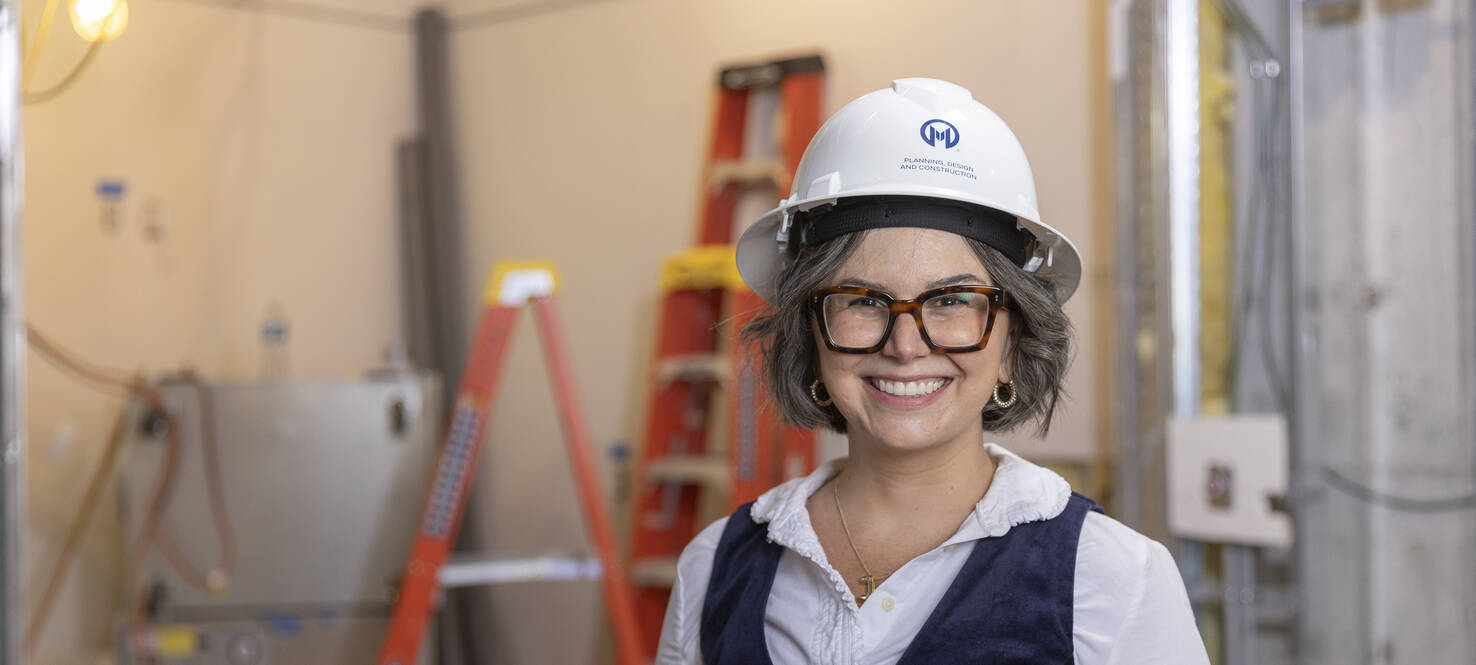
De Furio was no stranger to cancer. The structural engineer had been working at Moffitt Cancer Center for just shy of a year as a design and construction project manager. She was managing architects, engineers and contractors to build out the infrastructure needed to support patient care and scientific research.
Still, she didn’t have a strong personal connection to the disease. No family history. No close friends with cancer. When co-workers talked about how everyone has a connection to cancer, she thought: “I’m one of the lucky ones.”
Then she developed a pain in her right breast. It felt like a deep bruise. But there was no lump. No odd discharge. De Furio was 36 at the time and two years postpartum with her second child. She chalked it up to hormones.
When the pain didn’t go away, though, she decided to get checked out. “For peace of mind,” she told herself.
The mammogram showed a mass. The ultrasound signified a problem.
“At the imaging, I could tell the tone had shifted right off the bat, and I felt it in the room,” she remembered.
A biopsy and PET scan finalized her diagnosis: stage 3C, hormone-positive, HER2-negative invasive ductal carcinoma on the right breast.
The mother in De Furio was terrified. Worried for her husband, Anthony, and her little ones, Mary, 5, and Leo, 3. The engineer in her was processing. Gathering every bit of data to calculate the best path forward.
A Black Box Solution
De Furio’s oncologist, Aixa Soyano, MD, walked her through the diagnosis and the treatment options. Considering everything they knew about her type of cancer, the standard of care solution was two blocks of chemotherapy, surgery and radiation.
“I remember the meeting very vividly. She was helping translate my actual diagnosis and she pulled up a PowerPoint,” De Furio said. “And I didn’t realize until then just how prescriptive breast cancer care is. There’s a handful of variables that they get upfront. So, like, what are your tumor biomarkers? How big is it? How many lymph nodes are suspicious? How old are you? If this, then this; if this, then this. It was like a formula in an Excel spreadsheet.”
From there, years of scientific research and patient outcomes predict the best treatment path.
 “The engineer in me just loved everything about this trial,” De Furio said. “The way they do it, the data they collect. It turned it into this sense of purpose. They’re trying to find out what medications may be even better than this standard of care treatment.”
“In my mind, it was very black box, as we call it in engineering,” De Furio said. In her field, engineers learn all the calculations that go into solving a structural problem. But in practice, they often can input that data into a computer and rely on it to do the calculations and spit out the solution. There’s little visibility into the calculations — thus, the black box. Good engineers are careful to check the calculations, understand the reasoning behind the solution and pivot when there’s a better option.
Soyano offered De Furio an option to pivot. After talking through the standard of care, Soyano explained a clinical trial that De Furio was eligible to enroll in. The phase 2 trial, called I-SPY 2.2, treats patients diagnosed with stage 2 or 3 breast cancer using therapies already approved to treat later stage metastatic breast cancer or other types of diseases. After receiving an experimental therapy, the patients may go on to receive the standard of care treatments.
De Furio would need to undergo further testing to collect more information about her type of tumor. She would also be monitored closely throughout the trial with additional imaging to collect data on how the therapy was working. Her treatment plan could change depending on the results of each test. After the experimental treatment, if she still showed signs of disease, she would move on to the standard of care.
De Furio was in.
“The engineer in me just loved everything about this trial,” she said. “The way they do it, the data they collect. It turned it into this sense of purpose. They’re trying to find out what medications may be even better than this standard of care treatment.”
She was excited about the opportunity to think outside the black box.
An Adaptive Trial Design
I-SPY 2.2 is a long-running multicenter clinical trial that began enrolling patients in 2010. Unlike most trials, which evaluate one type of therapy at a time, the I-SPY 2.2 platform trial evaluates multiple lines of experimental therapies at the same time, matching them to patients based on specific testing at enrollment.
Patients who join the I-SPY 2.2 trial start by doing a biopsy to identify tumor biomarkers, a baseline MRI to assess tumor volume and a genomic test called a MammaPrint that determines whether a tumor is high risk or low risk for recurrence.
Based on the data gleaned from these tests, patients are assigned to a line of therapy that shows promise in treating their subtype of cancer. They receive the experimental therapy for 12 weeks, with monitoring at three- to six-week intervals to determine the treatment’s effectiveness.
By giving the experimental therapy first, before surgery or traditional chemotherapies, investigators and doctors can monitor its effects on the tumor and make informed decisions on how to proceed. If the patient achieves a complete response at any point, they can move on to surgery and avoid additional unnecessary treatments. If scans show the cancer is progressing, the patient can move on to the next treatment earlier than planned.
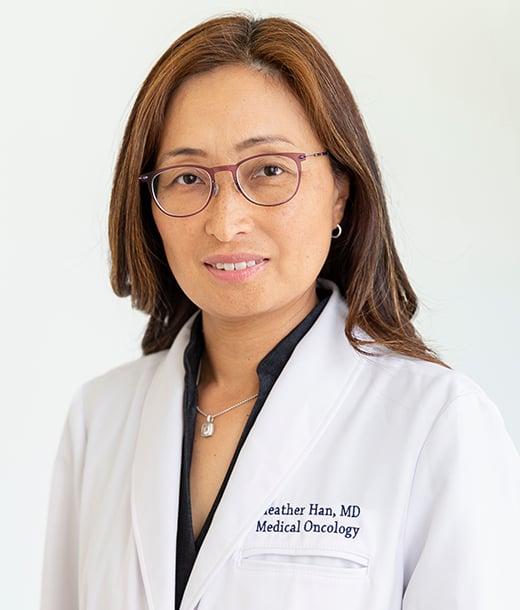
That adaptive design benefits both the patients and the research as assignments change over time to favor better performing treatment, says Heather Han, MD, director of clinical research in the Breast Oncology Department and principal investigator for the trial at Moffitt. After researchers have collected enough data on a therapy to determine its effectiveness, the treatment can “graduate” from the trial, meaning it shows a high likelihood of success in a future phase 3 trial.
New types of therapies are continually added to the mix, allowing for quicker evaluation of multiple treatments at a time. “It’s a rapidly evolving system,” Han explained. “The design of this clinical trial enables us to constantly assess how patients are doing, and if a treatment is very effective, sometimes we expand. If it’s less effective, sometimes we may close it.”
Once the patient completes the first block of the experimental treatment, if testing shows a complete response, they can go directly to surgery. If they have not had a complete response, they move on to receive the second block of therapy, which is the standard of care for their cancer type. Ongoing imaging determines whether they go on to receive a third block of standard of care treatment before moving on to surgery.
“That’s obviously nice because patients are signed up for something experimental, but you always have access to regular chemotherapy you’d have gotten anyway,” Han explained. “We’re just saving that for later to let this newer drug have a chance to work, potentially better than standard chemotherapy. The whole goal is to find the better drugs than the current standard of care.”
More Data, More Monitoring
De Furio’s initial tests on the trial gave investigators more information on her tumor subtype. From there, she was assigned to an arm of treatment.
“It’s just a deeper dive into what was actually going on in my body and then a more personalized treatment based off of that,” she said. “Then, throughout treatment, I got more frequent scans, and so from the engineering side of things, I got to know a lot more upfront, which means I was much more comfortable with what the treatment was and why I was getting it.”
Based on De Furio’s tumor subtype, she started on trastuzumab deruxtecan, known as Enhertu, a medication that has already been approved by the U.S. Food and Drug Administration to treat HER2-positive and HER2-low metastatic breast cancer. Enhertu is an antibody drug conjugate that targets the HER2 receptors on the surface of cancer cells, delivering chemotherapy directly to those cells as well as nearby cancer cells. Although De Furio’s cancer was HER2 negative, the additional testing done as part of the trial indicated that her tumor had enough HER2 expression to give the medication a chance at working.
As part of the experimental treatment, Enhertu was combined with another medication called rilvegostomig, a bispecific antibody that targets two different types of receptors on immune cells at the same time. This dual targeting boosts the immune system to help it recognize and attack the cancer.
De Furio started the first block of treatment on June 18, 2024.
The MRIs showed a significant response. At the end of her 12 weeks on Enhertu and rilvegostomig, De Furio’s tumor had shrunk, but she did not have a complete response. That meant she moved on to the second block of the standard of care treatment.
For the next three months, she received Taxol, a traditional type of chemotherapy that damages the cytoskeleton of the cancer cells and stops them from dividing. With imaging still showing signs of her shrunken tumor, De Furio went on to the third block of treatment, two months of AC, a chemotherapy regimen that combines Adriamycin and Cytoxan to attack the DNA of cancer cells and prevent them from replicating.
Although the treatment was grueling, she was motivated by the additional imaging she received that showed her tumor shrinking.
“Because I did I-SPY, I got way more MRIs than a normal standard of care,” she said. “So I got to actually watch my cancer go away. I got to see in real time that what I was doing was making an impact.”
A Complex Operation
Throughout her treatment, De Furio marveled at the fact that she happened to be diagnosed and work at the only cancer center in Florida at the time that offered access to the I-SPY 2.2 trial.
“There are good doctors everywhere, there are talented radiologists everywhere and there are amazing nurses everywhere. But not every institution can put up the gumption to participate in something like this,” she said.
Han agrees.
Across the United States, only about 50 locations offer the trial, which is run by a nonprofit consortium called Quantum Leap Healthcare Collaborative. The massive scale of the trial requires a lot of coordination across treatment locations, which are enrolling and monitoring patients, as well as a centralized hub where radiologists and scientists from the consortium are reviewing all the imaging and biopsy results and sending recommendations back to the care teams.
“It’s complicated because it requires a lot of multidisciplinary work between radiologists, pathologists, research teams, medical oncologists and surgeons to make all these decisions at multiple points in time,” Han explained. “So it’s heavily done through major academic centers like Moffitt. It’s not yet something that’s open to small community practices.”
Since its launch in 2010, Quantum Leap reports that I-SPY 2.2 has enrolled 2,800 patients and completed evaluation of 25 therapies. Moffitt has enrolled more than 100 patients since it became a trial site in 2014.
-

2,800
Number of patients enrolled in I-SPY 2.2
-

3
Number of FDA approvals that have resulted from I-SPY 2.2
During that time, the efforts have resulted in big strides in treatment of earlier stage breast cancers. The trial has led to three FDA approvals, including that of Keytruda, the innovative immunotherapy that was approved in 2021 to treat patients with high-risk, early-stage triple-negative breast cancer.
Han points out how patients on the I-SPY 2.2 trial had access to that blockbuster medication years before it was approved by the FDA. Moffitt had patients on the experimental medication back in 2015, she notes.
“Now it’s a standard of care, but years before the approval, some of our patients already had access to this newer drug,” Han said. “So in a way, obviously those patients took a risk, those brave people who signed up for the trial, and some of the patients benefited. That’s a successful example that many other drugs could become like that.”
‘We’re Still Lacking Innovation’
Han and Soyano highlight the need for this type of outside the box thinking for patients with earlier stage disease.
“Clinical trials are very much reserved for patients who have stage 4 cancer,” Han explained. “It’s still a very new concept for early-stage breast cancer patients to sign up for a clinical trial or even to think about it. Because a lot of times, with standard of care, we just tend to continue what’s already decided from the beginning.”
The black box solution, as De Furio called it.
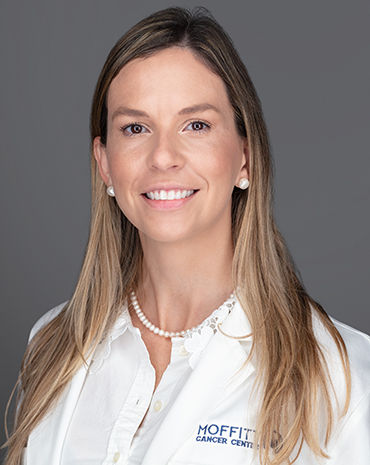
“Right now, we still use the same chemotherapy regimens that we’ve used for 20 years, 30 years, 40 years,” Soyano said. “We have made big strides in medications in the metastatic setting, and we have multiple FDA approvals over the past five years. But in the early-stage setting, we’re still lacking innovation.”
Trials like I-SPY 2.2 open the doors for innovation and better outcomes in these patient populations. Still, patients may be hesitant to stray from the norm.
De Furio heard that often from fellow patients when she mentioned she was on the trial.
“With standard of care, you get this concrete plan, and there’s a lot of peace in that,” she explained. “One woman even said to me, ‘That’s the tried-and-true approach. Why would I want anything but that?’”
Han and Soyano stress to patients that the therapies being tested in clinical trials are safe and that there’s a scientific rationale for using them. They also emphasize the extra layer of monitoring that clinical trial patients receive as part of the process.
“In a clinical trial in the early-stage setting, we’re being safe, we’re trying to be more effective, and we’re trying to incorporate newer research and newer medications that might be more helpful than the standard of care,” Soyano said. “So it’s very important for patients to consider that we can’t advance science if we don’t use any modern techniques or modern treatment, but it’s ultimately up to the patient to decide what’s good for them.”
‘I’m Just So Glad I Did Everything’
By the time De Furio finished her three blocks of treatment on the trial in January 2025, her cancer had shrunk significantly but had not disappeared.
She went forward with a double mastectomy followed by radiation and then reconstruction surgery. She’s now on medication to limit the chance of recurrence.
Looking back, when De Furio signed up for the I-SPY 2.2 trial, she had high hopes that the experimental treatment she received would be the next miracle drug.
“I wanted my story to be that I got this experimental drug through this amazing cancer institution that I also happen to work at. How cool is that? And I’m this miracle case that got four infusions of Enhertu, and my cancer was gone, and then I just got a lumpectomy,” she said.
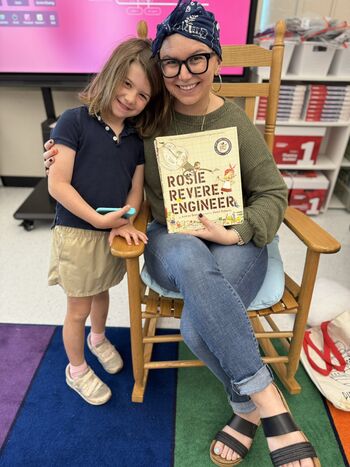 De Furio sees her participation in the trial as a way to contribute to the treatments of tomorrow. She thinks of her own daughter, who will need to be screened earlier due to De Furio’s young age at diagnosis.
It turns out, De Furio wasn’t the miracle case who got to skip the next two blocks of chemo, but she is confident that she benefited significantly from the trial treatment. Data from the arm of the trial she participated in is already showing promising results. Early analysis indicates that treatment beginning with Enhertu in combination with rilvegostomig has shown to be just as effective as the standard of care, with 64% of patients on the phase 2 trial skipping the second block of chemotherapy and 97% avoiding the third block of chemo.
Looking back, De Furio has a different perspective on her longer treatment journey.
“Once you’re on the other side, you realize that you would have done anything to kill the cancer,” she said. “At least for me, I’m so glad that I went at it with every single thing that may improve my long term outcome, because now, while there are no guarantees, I know that I went at it, not only with standard of care, but also with this new experimental drug. I’m just so glad I did everything. I think I would have so much regret if I didn’t.”
De Furio is now back at work. Two of her projects involve managing the renovation of spaces where she received treatment just months ago. She has also joined another trial that is evaluating dietary interventions for breast cancer survivors. It is based in the research kitchen she built out as one of her first projects at Moffitt.
Every day, the engineer in her calculates how she is contributing to a better experience for patients. The survivor in her thinks of how her personal contributions to research will benefit the patients of tomorrow. Mostly, she thinks of her own daughter, who will need to start getting mammograms at 26 because of De Furio’s diagnosis at 36.
“If this is going to be my story, then at least I can know that I played this tiny little role. I’m just one of the many numbers on these trials that is feeding the data that, in one way or another, will make this better,” she said. “When my daughter grows up, hopefully she will never have to deal with this, but God forbid she does. At that moment, I would want all the science right now to be the best that it could possibly be. If there’s an opportunity to be a guinea pig, I’m here and I’m in.”
 Medically reviewed by Heather Han, MD, Breast Oncology Department