What Are the Different Types of Radiation Therapy and What Do They Treat?
Key takeaways:
• Moffitt Cancer Center offers a wide range of radiation therapies tailored to each patient's cancer type and anatomy
• Treatments include external beam radiation, brachytherapy, proton therapy and advanced image-guided techniques that maximize tumor targeting while protecting healthy tissue
• Specialized therapies treat cancers throughout the body, with options for breast, prostate, lung, brain, blood and other cancers including preparation for stem cell transplants
Radiation therapy is an integral part of the comprehensive care provided at Moffitt Cancer Center. Patients have access to a wide range of radiation therapies that help damage cancer cells so they cannot reproduce and they die.

What Is Radiation Therapy and Why Is it Important?
Radiation therapy is designed to kill cancerous cells for potential cure as well as to alleviate symptoms. It is often a part of a patient’s care at some point in their cancer journey.
"There isn't a single radiation therapy that's best for every patient," said Sarah Hoffe, MD, Moffitt’s radiation oncology director of XR and innovation. “Each type of radiation has unique advantages that depend on the type and location of the cancer.”
Radiation-based treatments are used in the management of many different types and stages of cancer.
At Moffitt, team members are highly specialized, personalizing the radiation plan to the individual patient’s unique circumstances. Physicians have many advanced tools they can use, consisting of highly precise types of treatments with the right choice based on the patient’s individual case.
Types of radiation therapy a patient can receive include:
External radiotherapy is not one specific type of radiation treatment but rather a broad category of radiation delivery methods.
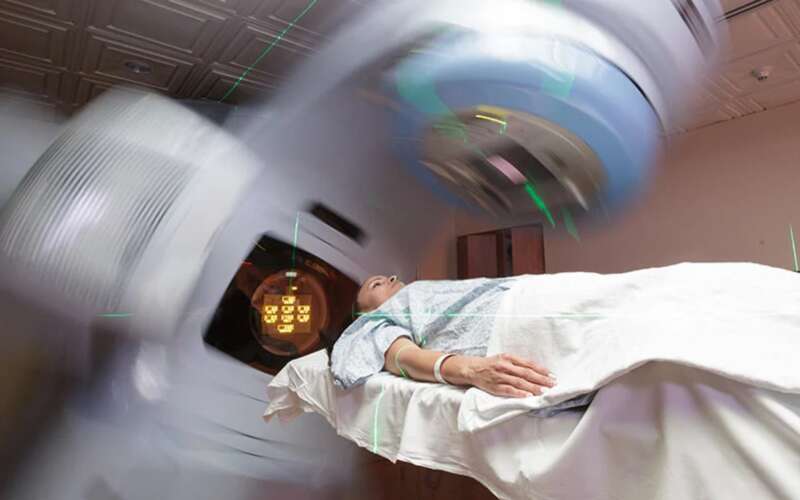
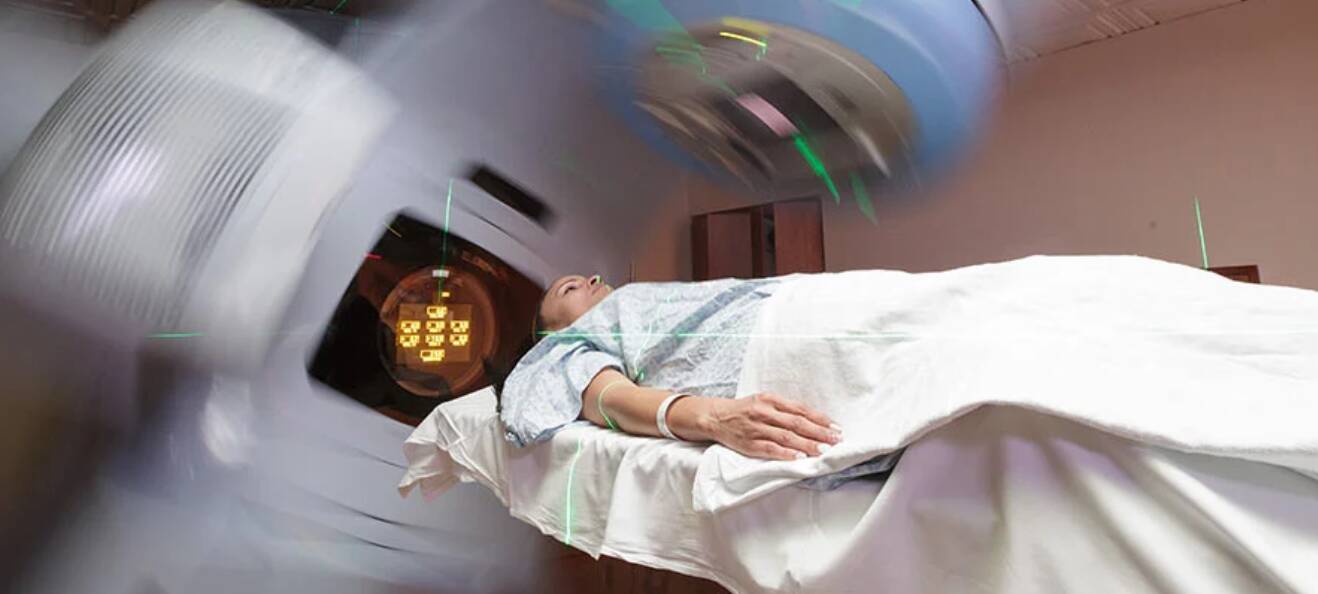
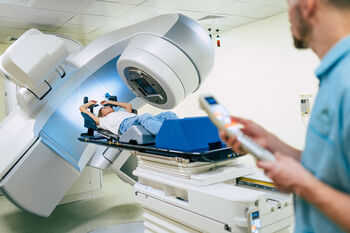
Most people are treated with external beam therapy using a specialized machine, called a linear accelerator, which uses modern technology to deliver highly focused beams of energy. The patient lays still on the treatment table during this process as the machine rotates around the area of the body that is being treated.
3D CRT (Three-Dimensional Conformal Radiation Therapy): An advanced technique that incorporates a three-dimensional view of the targeted area and surrounding normal tissues. The radiation plan using this technique delivers a concentrated radiation dose to a tumor.
- Commonly used for: Tumors close to vital organs to minimize the effects to normal tissues.
Adaptive Radiotherapy: A type of radiation therapy that involves adjusting treatment to account for changes taking place within the patient's body, with the goal of delivering the most accurate radiation dosage possible each day.
- Commonly used for: Studies suggest potential for treating malignancies like pancreatic, bladder, head and neck, central lung, and prostate cancers.
APBI (Accelerated Partial Breast Irradiation): A localized type of breast radiation therapy that specifically treats an area from which a tumor was removed. APBI can be given in different ways, with techniques varying from delivery both inside and outside the patient’s body.
- Commonly used for: Mostly recommended following breast-conserving surgery for early-stage breast cancer, provided that the tumor was small, the surgical margins are clear (the surgeon believes that all cancer was removed) and there are no signs of cancer in the lymph nodes.
Brachytherapy: Also known as internal radiation therapy, the radioactive source is placed in or near the tumor. It can be delivered with permanent seeds that decay over time (LDR or low dose rate), or it can be delivered with a source that can be removed after 10 to 15 minutes (HDR or high dose rate).
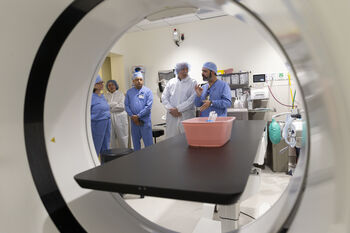
Moffit's new brachytherapy suite lets patients complete specialized radiation treatment in less time with fewer complications.
- Commonly used for: Prostate cancers, gynecologic cancers, skin cancers, brain cancer, breast cancer, cervical cancer, head and neck cancers, lung cancer, soft tissue sarcomas, vaginal cancer, uterine (endometrial) cancer, cancers affecting the eye
Moffitt opened its dedicated specialty Richard Gonzmart Brachytherapy Suite in Oct. 2025, and has already treated more than 150 patients with prostate cancer.
IGRT (Image Guided Radiation Therapy): Imaging in the treatment position prior to daily delivery is used to enhance accuracy throughout the course of a patient’s radiation treatment. This technique makes it possible to narrowly focus powerful radiation beams on a targeted tumor, even as the tumor shrinks overtime or moves during a patient’s natural breathing cycle.
- Commonly used for: Tumors close to vital and sensitive organs like the heart and kidneys, and can be useful for tumors in parts of the body prone to movement like the lungs, prostate, and abdomen
IMRT (Intensity Modulated Radiation Therapy): Precisely shaped radiation beams are directed at a solid tumor with the ability to individually control delivery of each beam to maximize dose to the cancerous target and minimize dose to the adjacent normal tissue.
- Commonly used for: Unusually shaped tumors and those close to vital organs, which have an increased likelihood of producing side effects if the nearby healthy tissues sustain damage during treatment
Linear Accelerator (LINAC): A machine that is commonly used to deliver external beam radiation treatments to cancer patients. A radiation oncologist will work with a dosimetrist and a medical physicist to develop an individualized treatment plan, including an appropriate radiation treatment delivery method, schedule and dosage.
- Commonly used for: Cancer in virtually any area of the body
MRI-Linac (MRI-Guided Adaptive Radiation Therapy): MRI Linac combines the imaging precision of an MRI with the treatment capability of a linear accelerator, which is a machine that produces high-powered X-rays to treat cancer. The combination in one machine allows the team to precisely track the position of the targeted area despite the daily variations in breathing and normal organ motion.
- Commonly used for: Allows team members to adapt radiation in real time to adjust for movement and results in improved accuracy and outcomes for cancer types like pancreatic, lung, prostate and liver cancers
Total Skin Electron Therapy (TSET): The entire surface of the skin is treated with low-energy electron beams. Since electrons do not travel deep below the surface of the skin, underlying tissues and organs are usually minimally affected by TSET.
- Commonly used for: Treatment for mycosis fungoides, a type of cutaneous T-cell lymphoma
Proton therapy: A type of external beam radiation therapy, using a highly precise method to target and treat certain cancers. Unlike traditional radiation therapy, proton therapy harnesses charged proton particles to deliver radiation directly to a tumor. This approach minimizes damage to surrounding healthy tissue, making it especially useful in certain cases.
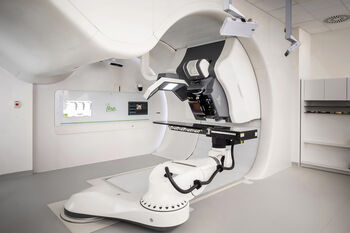
The Proteus®ONE system can deliver high-dose radiation with sub-millimeter accuracy — about the width of a human hair — allowing for fewer side effects and greater protection of healthy tissue. Its rotating gantry treats tumors from multiple angles, improving comfort and enabling a smoother experience during each session.
- Commonly used for: Most effective for solid tumors with well-defined borders, particularly when near vital organs or structures. It may be recommended when surgery is not an option. Cancers include brain tumors, eye melanoma, breast, head and neck, liver, prostate, and lung cancers. In addition, lymphoma, pituitary gland tumors, sarcoma and spinal cord tumors can be treated with proton therapy.
Moffitt will become home to an U.S. Food and Drug Administration-cleared proton therapy machine this July, ensuring that patients in this area have access to a larger variety of treatment options. At the Moffitt Proton Center at Speros, patients will benefit from one of the most precise cancer treatment technologies available.
SBRT (Stereotactic Body Radiation Therapy): A carefully programmed system of coordinates is used to deliver narrowly focused, high-dose radiation beams to a solid tumor in five or less treatment days. The goal of SBRT is to damage the DNA of the cancerous cells so that the tumor is destroyed.
- Commonly used for: May be an alternative to invasive surgical treatment for a patient who cannot undergo surgery or may be used to address tumors difficult to reach. Some malignancies include liver, lung, pancreatic cancer and prostate cancers.

Despite its name, stereotactic radiosurgery does not require an invasive surgical procedure, but rather a unique, targeted approach to deliver precise high-dose radiation therapy.
Stereotactic Radiosurgery: This unique, targeted approach to deliver precise high-dose radiation therapy uses carefully shaped radiation beams to destroy cancerous cells with great precision typically in one treatment session. It allows providers to pinpoint the radiation delivery field to within two millimeters of an intended target.
- Commonly used for: Due to its exceptional accuracy, this treatment is often ideal for addressing tumors in hard-to-reach or delicate locations where traditional surgery may not be an option.
Total Body Irradiation (TBI): A patient’s whole body is treated with radiation as the name suggests. While targeted radiation therapy is designed to shrink one or more tumors in a specific part of the body, whole-body radiation therapy is used to prepare the body for a stem cell or bone marrow transplant.
- Commonly used for: This can be an effective treatment for cancers including leukemia, lymphoma, and multiple myeloma.
Volumetric Modulated Arc Therapy (VMAT): A type of treatment in which radiation is delivered with a single rotation of a linear accelerator, designed to precisely target dose to the tumor while sparing normal tissue.
- Commonly used for: Volumetric modulated arc therapy can be used to treat several types of solid tumors, including prostate cancer, liver cancer, and pancreatic cancer.