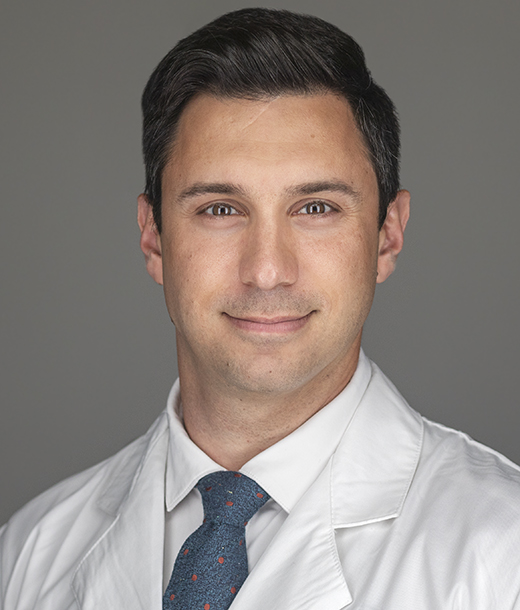
Recognize Soft Tissue Sarcomas with Dr. Lazarides
Dr. Alexander Lazarides, a Sarcoma Surgeon at Moffitt Cancer Center, shares tips on recognizing and referring potential soft tissue sarcomas. Dr. Lazarides emphasizes maintaining a high index of suspicion for any deep, firm, rapidly enlarging, or large (≥5 cm) soft tissue mass, noting that delays often occur when masses are assumed to be benign.
He outlines the recommended imaging: MRI with and without contrast for extremity or trunk masses, and CT with contrast for abdominal or retroperitoneal masses. He advises that biopsies ideally be performed at the treating institution to avoid compromising treatment planning.
The discussion reinforces that early referral to a sarcoma specialty team can significantly impact patient outcomes and directs providers to Moffitt’s referral resources.
Thanks for watching! Subscribe to Cancer Chats with Marina to get the latest updates from our Physician Liaisons and Moffitt Providers.
To refer a patient to Moffitt, use our online form or contact a physician liaison. Online referrals are typically responded to in 24-48 hours.
Video Transcript
Marina:
Welcome to Cancer Chats with Marina! I’m excited to introduce you to one of our Sarcoma Surgeons, Dr. Alexander Lazarides, thank you for joining us today.
Dr. Lazarides:
Thanks for having me.
Marina:
This morning we’re speaking directly to providers who encounter soft tissue masses in their practice. Dr. Lazarides, when should they consider referring a patient to you and the sarcoma team at Moffitt?
Dr. Lazarides:
The key is to have a high index of suspicion. Any deep, enlarging, or firm soft tissue mass especially if it’s 5 centimeters or larger, like the size of a golf ball [holding up a golf ball] a sarcoma specialist should evaluate it. We often see delays in diagnosis because masses are presumed to be benign, but it is important to be wary of any rapidly enlarging masses, any deep masses or a mass of a large size.
Marina:
That’s great guidance. Once a provider decides to refer, what imaging should they send with the patient?
Dr. Lazarides:
The best initial imaging is an MRI with and without contrast for extremity or trunk masses, or a CT scan with contrast for deep abdominal or retroperitoneal masses. If an MRI or CT isn’t available, an ultrasound can help determine if the mass is solid or cystic, but advanced imaging is still needed. A good rule of thumb is that any large (>5 cm), deep mass be considered a soft tissue sarcoma unless proven otherwise. But remember, these masses can be in the superficial soft tissues as well.
It’s important that a biopsy be performed at the treating institution, so if there is any question, we recommend holding on a biopsy prior to referral, as improper technique can affect treatment planning. But if a biopsy is performed, generally an image guided core needle technique is preferred over open techniques.
Marina:
That’s such an important takeaway—early referral truly impacts patient outcomes in a meaningful way. Thanks, Dr. Lazarides, for shedding light on this.
If you need to refer a patient, visit Moffitt.org/Refer or contact our Physician Liaison team at physician.liaisons@moffitt.org.
Thanks for joining us!