Skip to nav Skip to content

check mark symbol Medically reviewed by Dr. Peter Forsyth, Chair, Neuro-Oncology Program.

When cancer spreads to the membranes surrounding the brain and spinal cord, treatment can become challenging. This condition is known as leptomeningeal disease (LMD). 

As a rare condition, treatment options are limited. However, researchers at Moffitt Cancer Center are investigating new ways to help the immune system recognize and fight cancer cells in this difficult-to-treat area. A Phase II clinical trial led by Peter Forsyth, MD, chair of Moffitt's Neuro-Oncology Program, is evaluating a combination of immunotherapy approaches for those with breast cancer that has spread to the leptomeninges. 

Interested in learning more about current clinical trials at Moffitt? One of our clinical trial navigators can help you explore your options and suggest opportunities that may be right for you.
Submit a clinical trials inquiry

What is LMD? 

The brain and spinal cord are surrounded by thin layers of tissue called the meninges. Cerebrospinal fluid, which cushions and protects the brain and spinal cord, circulates within this system. 

LMD usually develops when cancer spreads from another part of the body, such as the breast or lungs. Cancer cells can enter the cerebrospinal fluid and affect the tissues surrounding the brain and spinal cord. 

LMD can cause a range of symptoms, depending on which areas of the nervous system are affected. These may include headaches, nausea, changes in vision, weakness, balance problems, or changes in sensation. Symptoms can overlap with those of other conditions, so medical evaluation is important for anyone experiencing new or worsening neurological symptoms. 

Treating LMD can be challenging because many cancer therapies do not adequately reach the cerebrospinal fluid and the areas where cancer cells are present. The disease can also behave differently from the original cancer, making treatment decisions more complex. 

"Leptomeningeal disease remains one of the most challenging complications of cancer to treat, and patients urgently need more options," said Dr. Forsyth. "Through this clinical trial, we're investigating whether a dendritic cell vaccine combined with immunotherapy can help the immune system better recognize and fight cancer cells in the central nervous system."  

We just need to keep pushing the envelope, learning more about leptomeningeal disease biology, bringing this into the clinic and not accepting failure as an option.

How Is Immunotherapy Being Studied for Leptomeningeal Disease? 

Dendritic cells are immune cells that help the body recognize potential threats, including cancer cells. In this investigational approach, a vaccine made using the patient’s own dendritic cells is designed to help activate an immune response against proteins associated with breast cancer. 

The study is evaluating treatment combinations based on the cancer’s HER2 status: 

  • HER2-positive breast cancer: The dendritic cell vaccine is combined with trastuzumab, a targeted therapy that recognizes the HER2 protein on cancer cells. 
  • HER2-negative breast cancer: The vaccine is combined with nivolumab, an immunotherapy that helps the immune system recognize and attack cancer cells. HER2-negative breast cancer includes several subtypes, including triple-negative breast cancer. 

Both treatment combinations are administered intrathecally, meaning directly into the cerebrospinal fluid. This delivery method brings the treatments closer to the area affected by LMD. 
What Does Phase II Mean in a Cancer Clinical Trial? 

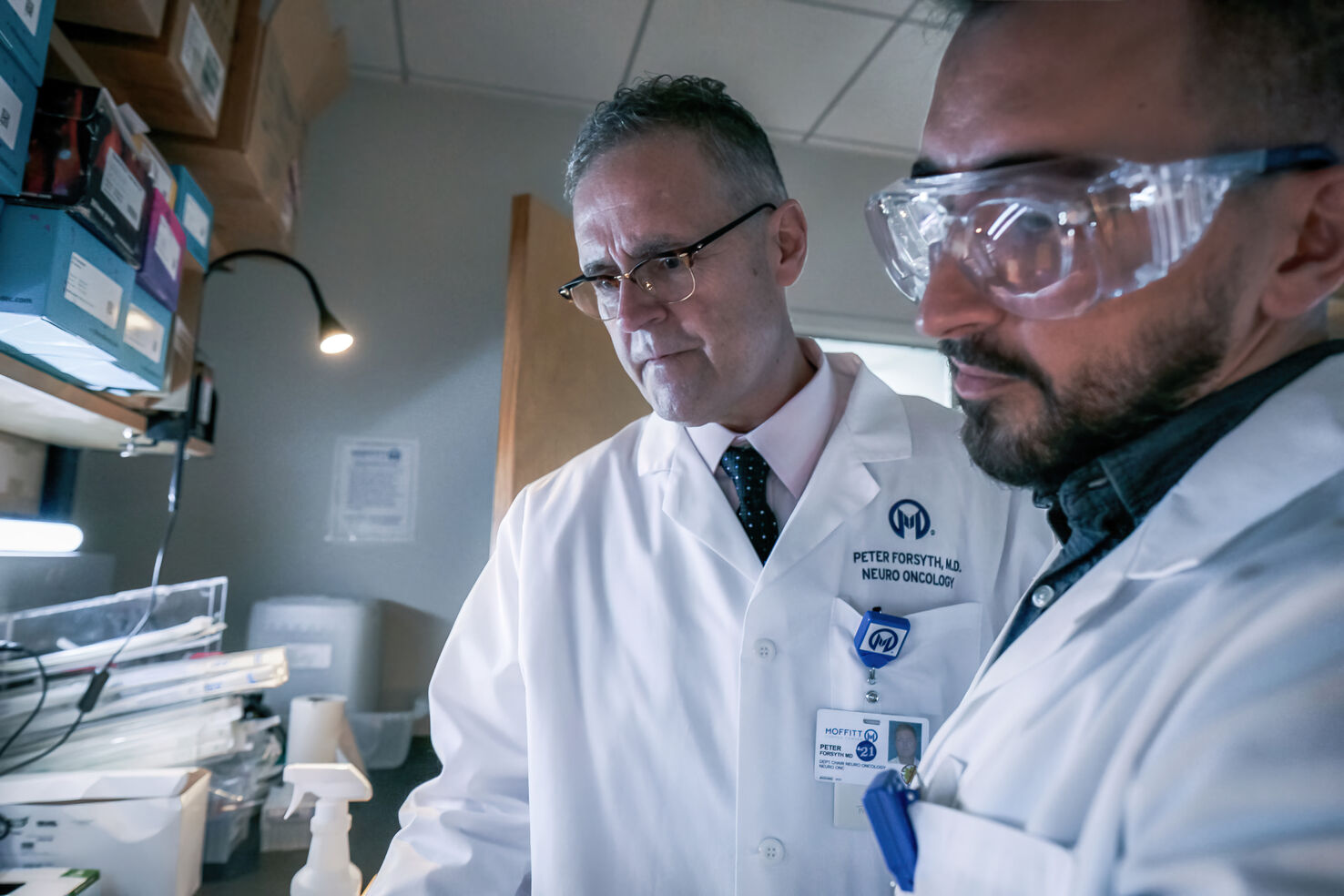
20220811_Forsyth-Neuro-Lab_1436hi_res.jpg

Clinical trials evaluate investigational treatments in stages. Phase I trials primarily assess a treatment’s safety and help researchers determine an appropriate dose. Phase II trials look for evidence that a treatment may help patients while continuing to assess its side effects. 

An earlier Phase I trial at Moffitt investigated a dendritic cell vaccine made using patients’ own immune cells and administered directly into the cerebrospinal fluid. The study was designed to evaluate the treatment and determine the highest dose that could be given safely. 

The current Phase II trial is evaluating treatment combinations based on the cancer’s HER2 status. An initial safety run-in, or early stage focused on evaluating safety and dosing, will help researchers determine the highest dose of each treatment combination that can be given without unacceptable side effects. The Phase II portion will evaluate outcomes, including median survival and the percentage of participants who survive for at least one year. Researchers will also assess side effects, response rates and the length of time patients remain progression-free, meaning their disease has not gotten worse. 

Participation does not guarantee a particular outcome. Click on the plus sign to read more about the inclusion and exclusion criteria for the clinical trial. 

  • Inclusion criteria

    Potential participants must: 

    • Be at least 18 years old. 
    • Have a confirmed diagnosis of leptomeningeal disease, established through cancer cells identified in the cerebrospinal fluid or specific findings on imaging that suggest LMD. Symptoms alone are not enough to qualify. 
    • Meet medical testing requirements for adequate organ function. 
    • Be able to undergo magnetic resonance imaging (MRI) of the brain with contrast to monitor the disease. 
    • Have an Ommaya reservoir or an equivalent device placed under the scalp to provide access to the cerebrospinal fluid for treatment. 
    • Have received whole-brain radiation therapy before participating. When possible, other radiation approaches that treat the brain and spinal cord are preferred. 
  • Exclusion criteria

    People may not qualify if they: 

    • Received immunotherapy within the previous four weeks. 
    • Are unable or unwilling to undergo a contrast-enhanced brain MRI. 
    • Underwent major surgery or experienced a significant traumatic injury within the previous two weeks. Ommaya reservoir placement is an exception. 
    • Have a shunt, including a ventriculoperitoneal or ventriculoatrial shunt. 

    These are key eligibility requirements, but the list may not include every factor that determines participation. Moffitt’s clinical trial team can review an individual’s medical history, previous treatments and other study requirements to determine eligibility. 

    If you would like to explore your treatment options and the possibility of participating in this clinical trial, you can request an appointment with an expert at Moffitt by calling 1-888-663-3488 or by submitting a new patient registration form online. A referral is not required.