
Celebrating 40 Years of Advancing Cancer Care
Key Takeaways:
- Moffitt has spent 40 years helping advance how cancer is detected, treated and prevented
- Major milestones include personalized cancer care, robotic surgery, CAR T-cell therapy and radiopharmaceuticals
- Newer advances such as TIL and proton therapy are expanding precision treatment options for patients
When Moffitt Cancer Center opened its doors in 1986, cancer care looked very different. Many of today’s treatments, from precision medicine and immunotherapy to cellular therapies, were still years or even decades away.
Moffitt looked a lot different, too.
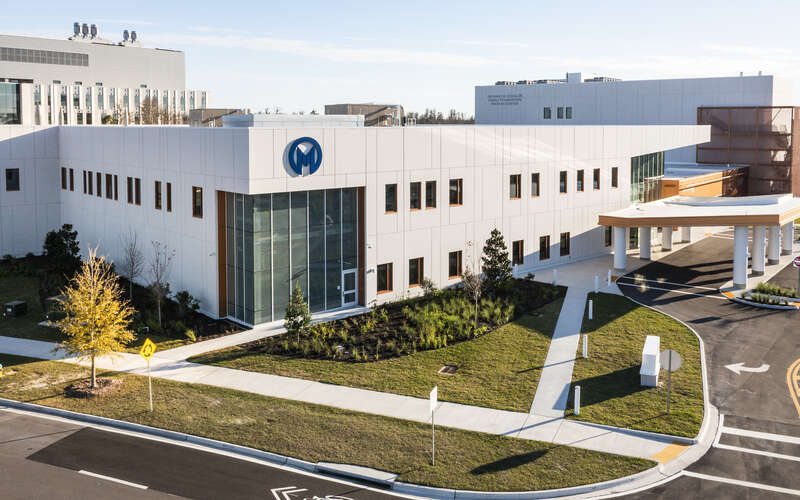
What started with one building, 162 beds and 409 team members has grown alongside some of the biggest changes in how cancer is prevented, detected and treated. As Moffitt celebrates its 40th anniversary, we’re looking back at advancements that helped shape cancer care.
1989: Blood and Marrow Transplantation
Three years after Moffitt opened, the Blood and Marrow Transplant Program began treating patients with certain blood cancers and disorders.

In 1989, Moffitt launched its Blood and Marrow Transplant Program.
Advances in donor matching, medications and supportive care have made transplantation safer and available to more patients. In 2025, Moffitt performed its 10,000th blood and marrow transplant.
1998-2001: Joining the Nation’s Top Cancer Centers
Moffitt earned National Cancer Institute designation and its first Cancer Center Support Grant in 1998. Just three years later, it achieved NCI Comprehensive Cancer Center status, the institute’s highest recognition.
The designation recognizes excellence in research and the ability to turn discoveries into better cancer prevention and care. Moffitt remains the only NCI-designated Comprehensive Cancer Center based in Florida.
2003-2006: A Move Toward Personalized Cancer Care
Moffitt established Total Cancer Care in 2003 to better understand why cancers behave differently and how to personalize treatment.
In 2006, the research protocol began collecting patient information and samples and following them over time. Today, the databank includes information from more than 140,000 patients and helps researchers study new and personalized ways to prevent and treat cancer.
2008: Robotic Surgery
Moffitt began performing robotic surgery procedures in 2008, giving surgeons a more precise, less invasive way to perform some cancer procedures.
Since 2008, Moffitt surgeons have successfully performed more than 15,000 robotic surgery procedures.

Using small incisions and robotic technology, surgeons can perform complex procedures that may mean less pain, shorter hospital stays and faster recovery. Today, Moffitt uses robotic surgery across several cancer types.
2014: New Ways to Treat Melanoma
For years, patients with advanced melanoma had few effective treatment options. That began to change with new targeted therapies and immunotherapies that offered a different way to attack cancer.
Moffitt researchers contributed to studies behind several of these treatments, including the targeted therapies Mekinist and Tafinlar and the immunotherapy Keytruda. These advances have transformed how advanced melanoma is treated.
2017: CAR T-Cell Therapy
CAR T-cell therapy turns a patient’s own immune cells into cancer fighters. Doctors collect T cells, genetically modify them to recognize cancer and return them to the patient to attack it.
Moffitt co-led the national ZUMA-1 trial that led to the 2017 FDA approval of Yescarta for certain adults with large B-cell lymphoma, helping bring a new treatment option to patients whose cancer had stopped responding to other therapies.
2018: Radiopharmaceuticals
Radiopharmaceuticals combine medicine with radioactive material to deliver radiation directly to cancer cells from inside the body.
Moffitt’s Jonathan Strosberg, MD, led the international NETTER-1 trial that helped lead to the 2018 FDA approval of Lutathera for certain neuroendocrine tumors. The treatment offered a new way to target cancer while limiting damage to nearby healthy tissue.
2024: TIL Therapy
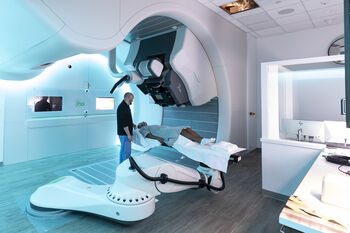
Proton therapy is a highly precise method used to target and treat certain cancers.
Tumor-infiltrating lymphocyte (TIL) therapy uses immune cells already found inside a patient’s tumor. The cells are removed, multiplied in a lab to billions, and returned to the patient to help fight cancer.
In 2024, the FDA approved the first TIL therapy for certain patients with advanced melanoma. Moffitt’s Amod Sarnaik, MD, led the phase 2 trial that helped pave the way for its approval.
2026: Proton Therapy
Proton therapy is a type of radiation treatment that can target tumors while limiting radiation exposure to nearby healthy tissue.
In 2026, Moffitt began treating patients with proton therapy at Moffitt’s SPEROS campus, adding another precise treatment option for patients with certain cancers, especially tumors located near sensitive organs and tissues.