First Patient To Complete Proton Therapy at Moffitt Rings Bell
Key takeaways:
- Shannon Ruetz became the first patient to complete proton therapy at Moffitt Cancer Center’s new Speros campus using the Proteus®ONE system
- Proton therapy helped treat Ruetz’s breast cancer while delivering virtually no radiation to her heart and lungs due to her significant cardiac history
- Moffitt team members say proton therapy benefits select patients and expands the center’s treatment options rather than replacing other radiation therapies
Shannon Ruetz left the Richard M. Schulze Family Foundation Proton Therapy Center at Moffitt Cancer Center’s Speros campus with gratitude and an eagerness to return to normal life.
“It’s about time,” Ruetz said. “Normalcy is what we need.”
Ruetz became the first patient to complete proton therapy at Moffitt using its Proteus®ONE system, the first and most advanced of its kind in the Tampa Bay area. The milestone came during the same week that Moffitt began treating patients at the new proton therapy center.
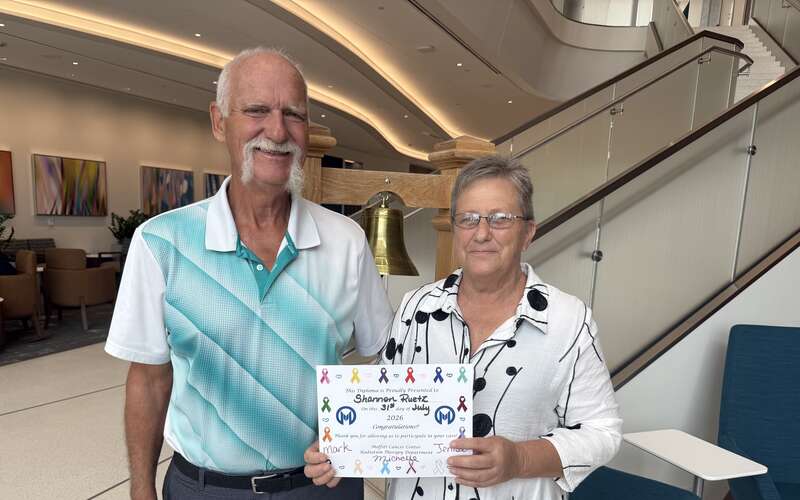
Moffitt team members cheered as Ruetz rang the bell alongside her husband of 38 years.
Beginning of Cancer Journey
Ruetz’s breast cancer journey began earlier this year when an annual mammogram led to additional imaging and biopsies. The cancer was located near her heart and lung.
“I told them I would like to come to Moffitt, and that’s the same day they sent all my records, all my labs, everything,” Ruetz said. “Moffitt called me the same day and set up my appointments.”
Several factors from the cancer location to Ruetz's medical history made protecting her heart especially important, says Roberto Diaz, MD, PhD, a breast radiation oncologist in Moffitt's Radiation Oncology Department.
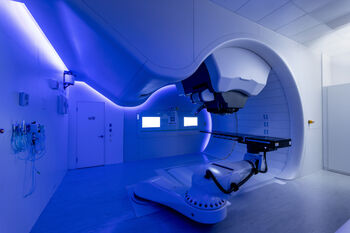 The proton beams can be controlled to stop at a designated point, reducing radiation exposure beyond the treatment area.
Proton therapy treatment became available for patients at Moffitt starting late July.In Ruetz’s case, Diaz says her medical history included significant cardiac issues, having survived three major heart attacks before due to her history of rheumatic fever.
Proton therapy resulted in virtually no radiation exposure to her heart and lungs.
“One of the advantages of protons is that the beam, as it’s being delivered, you can modulate it and say, ‘Up to here,’” Diaz said. “And then the physics of it is, it just stops. No more energy gets deposited.”
Another Important Tool
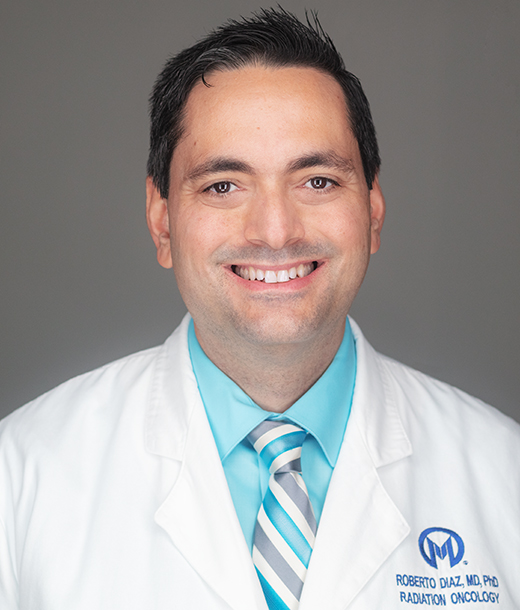
Diaz emphasizes that while proton therapy is most appropriate for a select group of patients, it is not necessarily better for everyone. Moffitt has safely and effectively provided other forms of radiation therapy for years, allowing team members to recommend treatment based on each patient’s individual needs.
"It is better for some, but it is not necessarily better for all," Diaz said. “It is absolutely another tool in the toolbox out of many that we have at our disposal.”
Ruetz says she wasn't aware of proton therapy prior to her diagnosis but says she trusted Diaz and her Moffitt team would provide the best option and care possible.
“I told him to do whatever he felt was best for me,” Ruetz said. “I put it all in his hands.”
Surrounded By Support
Ruetz and her husband celebrated the end of her treatment and her husband’s birthday with a special dinner. She expressed gratitude for the support she received from her family, friends, and Moffitt team throughout her cancer journey.
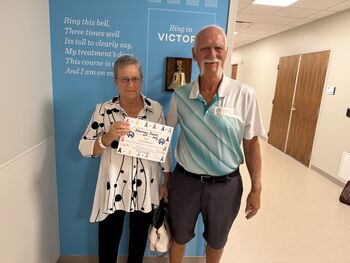
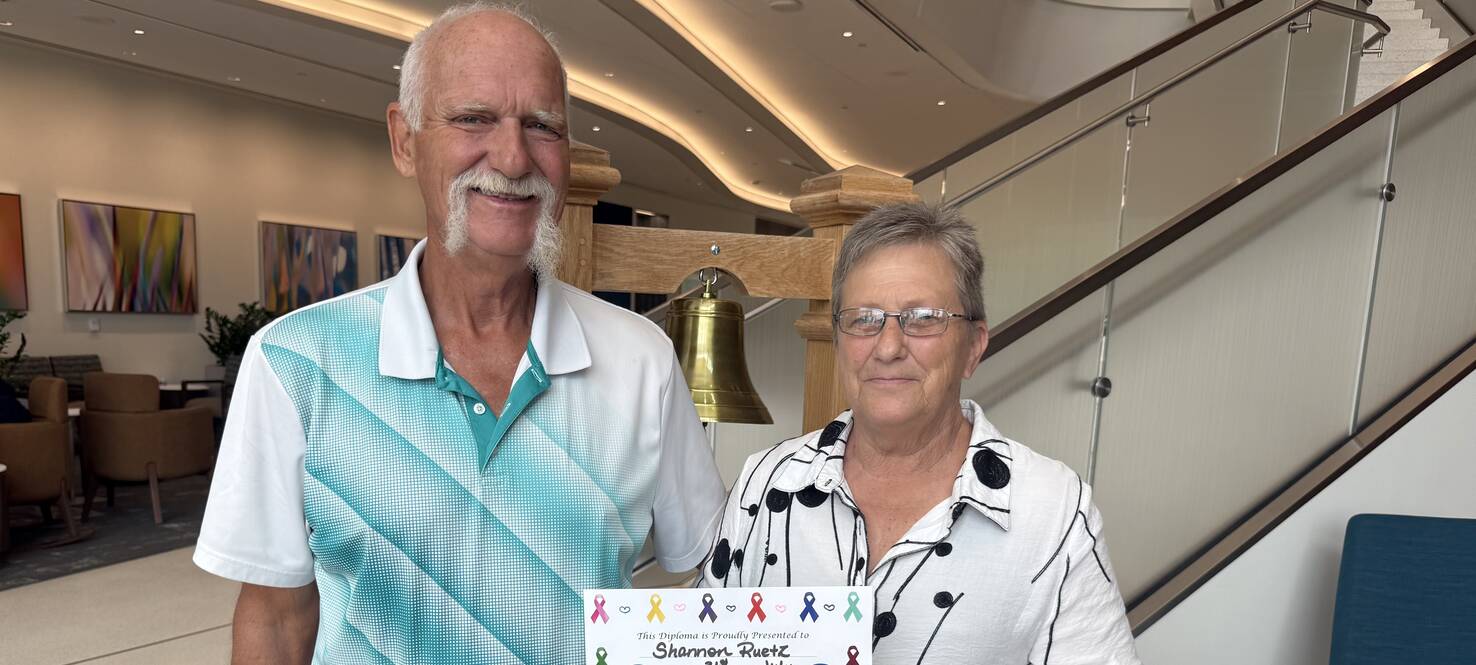
Shannon Ruetz poses with her husband after ringing the bell.
Diaz says Ruetz’s experience reflects teamwork throughout Moffitt, including physicians, nurses, social workers, medical dosimetrists, medical physicists and others working behind the scenes to provide the best care possible.
“We offer the quality but also that warmth from people who know what you are going through,” Diaz said. “You’re not a number and we try to come alongside you, in front of you, and behind you to support you and your family as you’re going through this.”