Moffitt Scientific Symposium Highlights Collaboration, Discovery and the Next Generation of Researchers
Key Takeaways:
- The 2026 Moffitt Scientific Symposium featured nearly 300 research abstracts, presentations and poster sessions
- Researchers presented studies on AI, immunotherapy, precision oncology and cancer metabolism across multiple scientific disciplines
- Moffitt leaders emphasized mentorship and collaboration as key drivers of future cancer research breakthroughs
The 2026 Moffitt Cancer Center Scientific Symposium brought together researchers, clinicians, trainees and students from across the center for a day focused on scientific discovery, collaboration and mentorship.
Held at the University of South Florida Marshall Student Center, the annual event featured nearly 300 abstracts, oral presentations and poster sessions spanning basic, clinical, translational, quantitative and population science research.
At #MoffittScientificSymposium, Alyssa Pybus, PhD, of the @jgoecks lab discusses how machine learning models using real-world clinical data can accurately predict immunotherapy outcomes in cancer patients. The work highlights the potential for clinician-scientist collaboration to… pic.twitter.com/ZYqLvAjFOR
— Moffitt Cancer Center (@MoffittNews) May 11, 2026
For Moffitt President and CEO, Patrick Hwu, MD, the symposium represents one of the clearest examples of what makes Moffitt unique.
“I love this symposium because it brings together our clinicians and our laboratory hard sciences, engineers, informaticians and math oncologists,” Hwu said. “That’s our secret sauce at Moffitt, having everybody work together to try to eliminate cancer.”
Research Across Disciplines
Throughout the day, attendees moved between featured poster presentations, oral sessions and crowded poster halls buzzing with conversation. Research topics ranged from artificial intelligence and immunotherapy to survivorship, metabolism and precision oncology. Featured presentations explored multimodal deep learning for glioblastoma survival prediction, CAR T-cell therapy, mathematical modeling of cancer treatment strategies and circulating tumor DNA analysis.
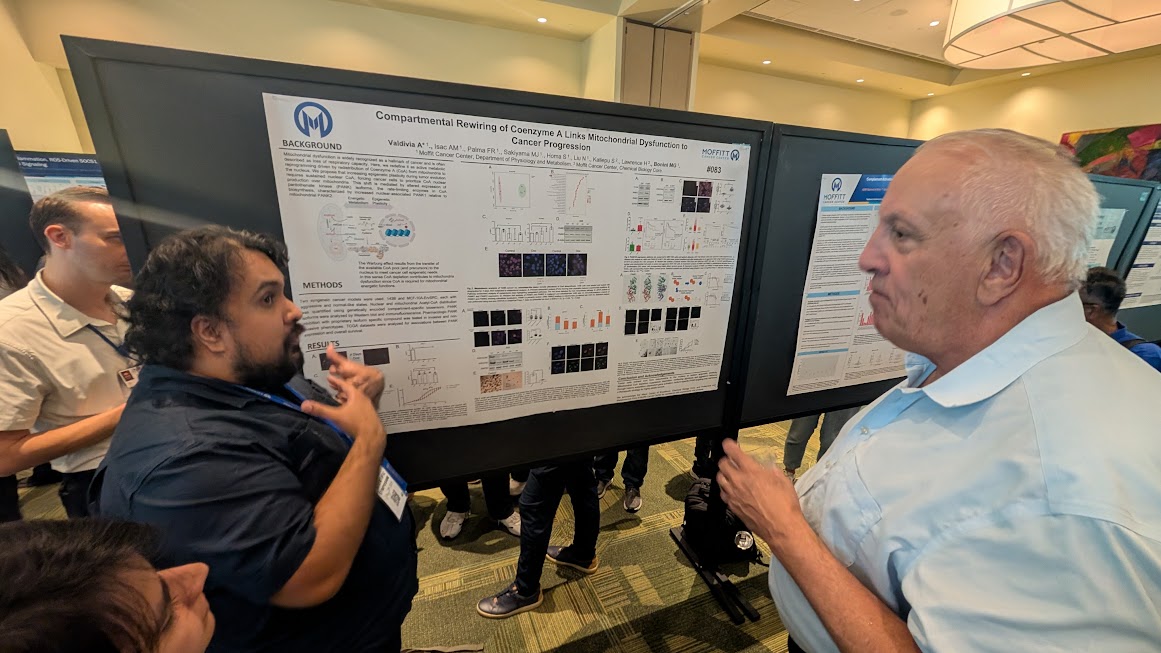
Andres Valdivia, PhD, discusses his research project with Moffitt Center Director, John Cleveland, PhD.
One project highlighted during the poster session came from Andres Valdivia, PhD, a research scientist who presented work titled, “Compartmental Rewiring of Coenzyme A Links Mitochondrial Dysfunction to Cancer Progression.” The research examined how disruptions in mitochondrial function may reshape metabolic pathways inside cancer cells and contribute to tumor progression.
Valdivia was among several presenters surprised during the symposium when Moffitt Center Director John Cleveland, PhD, stopped by posters to ask questions and offer feedback.
“It was a great honor, to be honest,” Valdivia said. “It’s not every day that somebody that high up in leadership comes in and asks you questions about your work and gets interested in what you’re doing.”
Valdivia says Cleveland offered advice not only about the science itself, but also about communicating research effectively.
“I’m going to be applying what he told me today, not only on the research, but also on the way I convey my science and present my science to other people,” he said.
Building Confidence Through Presentation
For many trainees, the symposium also served as an opportunity to build confidence and connect with researchers across disciplines and career stages.
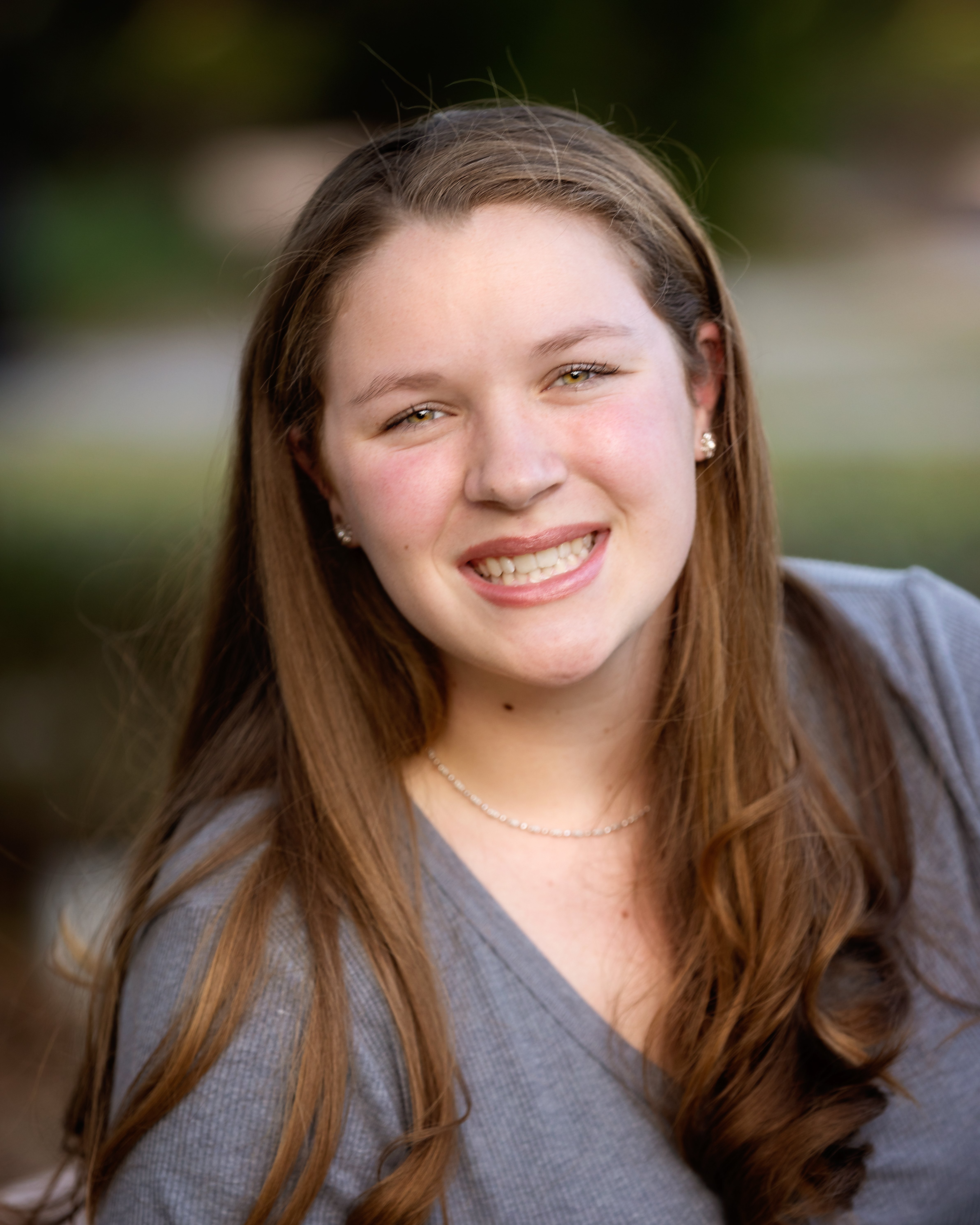
Hannah Taylor
Hannah Taylor, an undergraduate student in Erin George, MD’s lab said presenting her research alongside graduate students and postdoctoral fellows was both exciting and intimidating.
“It was definitely unexpected,” Taylor said of Cleveland stopping at her poster. “But I was honestly really excited to present my research because it’s definitely a project that I’ve been working on for a while.”
Taylor said one of the most valuable parts of the symposium was seeing the wide range of research taking place throughout Moffitt.
“I really loved the poster session, especially being able to walk around and see what other departments are working on and see their research too,” she said.
Mentorship and the Next Generation
The event also gave undergraduate trainees an opportunity to learn directly from senior scientific leaders. During one poster tour, Hwu walked alongside USF students Safa Khan and Shayla Pham, helping explain complex projects and the broader clinical significance behind the research.
“Being an undergrad, you really don’t know what anyone is saying sometimes,” Khan said. “So having him walk us through what he thought was remarkable was really interesting because we could see from his perspective and his expertise.”
Talking to some of our trainees about their work at today’s @MoffittNews #MoffittScientificSymposium, and during the poster walk, I get to guide a group around to help translate and discuss the exciting research being presented!
— Dr. Patrick Hwu (@PatrickHwuMD) May 11, 2026
🧬🗣️ Getting science out to the masses is… pic.twitter.com/8NVK5vvk2k
Pham, a third-year USF student, says exposure to conferences like the symposium is critical for young researchers.
“I think this is really crucial to be more exposed to research conferences like the Moffitt Symposium,” she said.
Hwu encouraged students and trainees to take advantage of opportunities to meet mentors and collaborate with researchers outside their own fields.
“You might think, ‘That’s a big famous person. I’m not going to talk to them.’ Talk to them,” Hwu said. “They want to help you. They want you to become the next generation of great researchers.”
The symposium concluded with the 2026 Senator Connie Mack Researcher of the Year keynote lecture delivered by Susan Vadaparampil, PhD, followed by poster award announcements and an evening reception.
For Hwu, the event’s greatest impact comes from the connections formed between researchers who may not otherwise cross paths.
“Bringing different sciences together with clinicians,” he said. “That’s where the magic happens.”