Moffitt Showcases Cancer Engineering Innovation at National Conference
Key Takeaways:
- Moffitt researchers contributed 27 scientific presentations, including 16 oral presentations and 11 posters, at the 2026 Biomedical Engineering Society Annual Meeting
- Researchers highlighted how advances in tumor models, imaging and drug delivery could improve cancer research and lead to more effective treatments
- The conference connected Moffitt scientists, clinicians and emerging researchers with experts across biomedical engineering, creating opportunities for new partnerships and discoveries
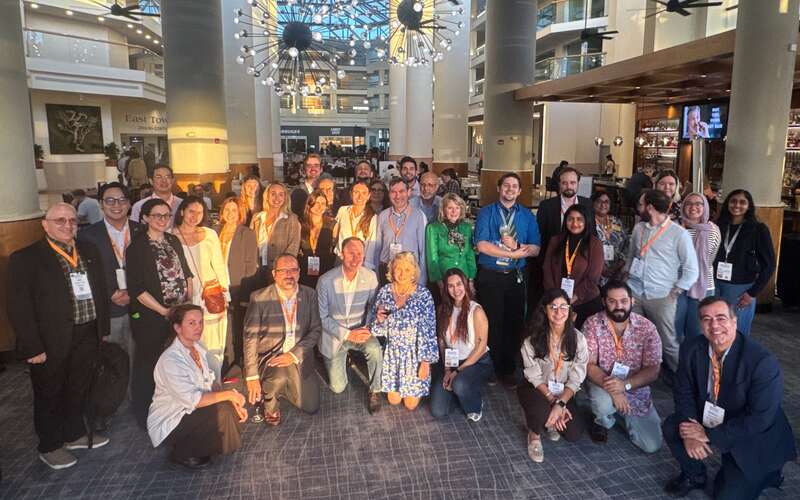
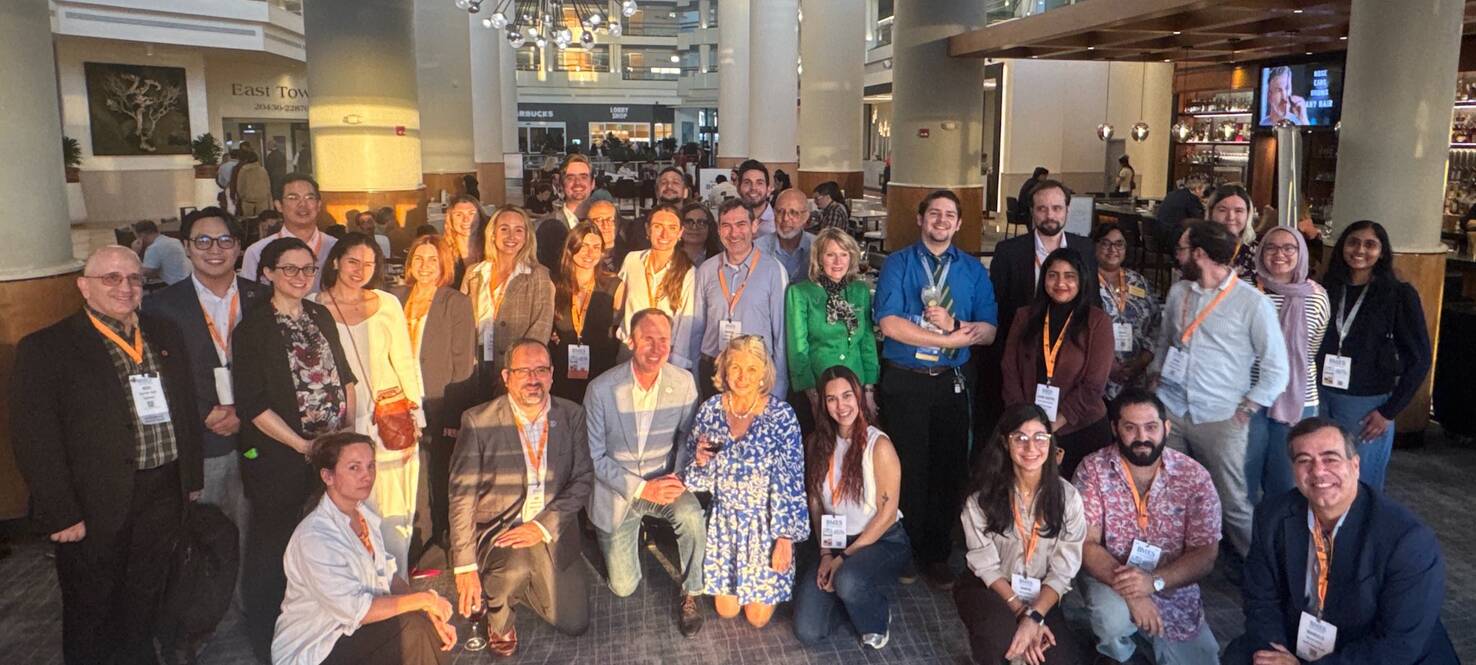
Moffitt Cancer Center researchers were at the forefront of engineering in cancer research at the 2026 Biomedical Engineering Society Annual Meeting in Orlando, showcasing innovations that could lead to better ways to study, diagnose and treat cancer.
Moffitt contributed 27 scientific presentations to the conference, including 16 oral presentations and 11 posters. The research highlighted how engineers, scientists and clinicians are working together to tackle some of the most challenging problems in oncology.
Happening now at #BMES2026: Greg Sawyer, PhD (@ProfGregSawyer), shares how gentle sliding reorganizes the cell skeleton in corneal models—findings that could help build more realistic models for drug discovery. #MoffittBMES26 https://t.co/sL3fJY6HS9
— Moffitt Cancer Center (@MoffittNews) October 23, 2026
Greg Sawyer, PhD, chair of Moffitt’s Bioengineering Department, emphasized that Moffitt's presence reflects the opportunities created by bringing different scientific disciplines together within a cancer center.
"Now that we’ve embedded engineering within the cancer center and had the clinicians, the basic scientists, engineers, mathematicians, basic scientists all working together, there's a lot of opportunity for innovation in this space," Sawyer said.
Engineering Better Models of Cancer
For Marcello Bonini, PhD, chair of the Metabolism and Physiology Department at Moffitt, attending Biomedical Engineering Society meeting for the first time provided an immediate reminder of how engineering could help address some of the limitations of traditional cancer research.
Bonini explained that laboratory models often fail to reproduce the complex conditions found inside human tumors. Those differences can make it difficult to translate promising discoveries into effective treatments for patients.
Oxidative changes to DNA-packaging proteins can help cancer cells become more adaptable. From #BMES2026, Marcelo Bonini, PhD (@Marcelobonini20), shares findings linking histone oxidation to breast cancer progression and drug resistance. #MoffittBMES26 https://t.co/6YVEfg9nKj
— Moffitt Cancer Center (@MoffittNews) October 24, 2026
"When you can engineer these variables, you make models that reproduce what the reality of the patient is. So now your discoveries are more relevant," Bonini said.
He pointed to advances in imaging, sensors and experimental models as examples of technologies that could help researchers better understand how tumors behave.
The conference also provided opportunities for Moffitt researchers to discover new approaches and build collaborations across scientific disciplines.
Connecting Engineering and Patient Care
Live from #BMES2026: Erin George, MD (@ErinGeorgeMD), explains how her team’s 3D ovarian cancer avatars preserve key tumor features and support research testing chemotherapy, immunotherapy and antibody-drug conjugates. Key takeaways: • Preservation of native tumor biology: Viable microtumors maintain epithelial architecture and key immune and stromal components during perfusion culture. • Clinically relevant drug responses: Patient-specific carboplatin sensitivity shows encouraging concordance with matched clinical responses. • Dynamic therapeutic testing: Longitudinal imaging enables assessment of chemotherapy and exploration of CAR-T and TROP2 ADC interactions. Next step: • Validate preservation of metabolic and immune-tumor interactions, establish prospective clinical concordance, and integrate functional responses with predictive modeling. #MoffittBMES26
— Moffitt Cancer Center (@MoffittNews) October 23, 2026
Erin George, MD, a physician scientist in Moffitt’s Gynecologic Oncology Department, whose undergraduate training was in biomedical engineering, says the meeting reinforced the value of bringing engineering principles into her work as a physician-scientist studying ovarian cancer.
“Part of me always wanted to bring back the work that I did as an engineer into the research that I'm doing now,” George said. “Pulling engineering into the work that I do has really made some meaningful advances in bringing novel therapeutic approaches to the women I'm trying to treat.”
For Duy Nguyen, PhD, assistant member in Moffitt’s Bioengineering Department, the conference highlighted both the rapid growth of biomedical engineering and its potential to influence patient care.
Great to catch up with Duy Nguyen, PhD, at #BMES2026 to discuss the research his lab is presenting on immune cells and microtumors. These conversations spark new ideas for how we can work together to better understand cancer. @MoffittNews #MoffittBMES26 https://t.co/gtwVz6ELZw
— W. Gregory Sawyer (@ProfGregSawyer) October 23, 2026
"For me, one of the most rewarding aspects of biomedical engineering is knowing that the technologies we develop and the research we conduct have the potential to make a meaningful difference in patient care,” Nguyen said.
He also emphasized the importance of fostering interdisciplinary collaborations and creating opportunities for engineering and other STEM students to apply their perspectives and expertise to cancer research.
Inspiring the Next Generation of Cancer Engineers
Athena Tsingelis, a fourth-year PhD student, presented research exploring a new approach to improving cancer immunotherapy. Her work uses a specialized microgel platform designed to deliver immune-stimulating proteins locally, with the goal of improving T-cell survival and antitumor activity while reducing potential toxicities.
Local delivery could help support cell-based immunotherapy—but long-term tolerability matters. At #BMES2026, Athena Tsingelis shares a 13-month mouse study of injectable hydrogels placed in the abdominal cavity. #MoffittBMES26 https://t.co/rhlGPv3xhc
— Moffitt Cancer Center (@MoffittNews) October 23, 2026
"We are not trying to replace anything but just enhance it," Tsingelis said, describing the goal of improving therapies already used in the clinic.
For Tsingelis, participating in the annual meeting was also an opportunity to connect with other emerging scientists and explore potential collaborations.
"I think it's really exciting to see how open these universities and industries are in collaborating with each other, building a stronger network," she said.
Sawyer believes the growing presence of cancer-focused research at Biomedical Engineering Society meeting signals a broader shift in biomedical engineering. He noted increasing interest in immune cell engineering, three-dimensional models, microscopy and other technologies with applications in oncology.
"We are championing the intersection of engineering with cancer,” Sawyer said. “That's cancer engineering.”
For Bonini, the conference offered a glimpse of what that intersection could mean for the future of cancer research.
"I'm very happy to see that cancer is coming to collide with engineering," Bonini said. "I think that's where the breakthroughs are going to come."