Standing Strong
Key Takeaways:
- Despite becoming a bilateral amputee, Vaughan DeBarr refused to let her circumstances define her
- By attaching prosthetic limbs directly to the bone rather than relying on traditional sockets, the procedure can reduce discomfort as well as improve stability and mobility
- Osseointegration involves several stages, including surgery, bone healing and rehabilitation
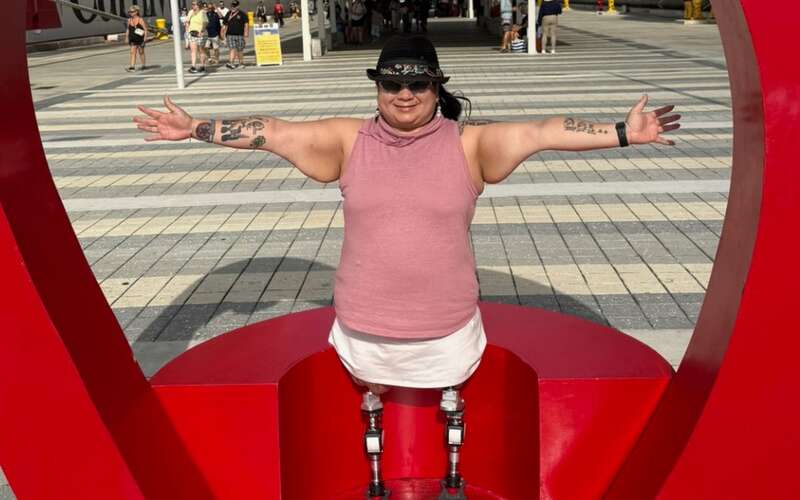
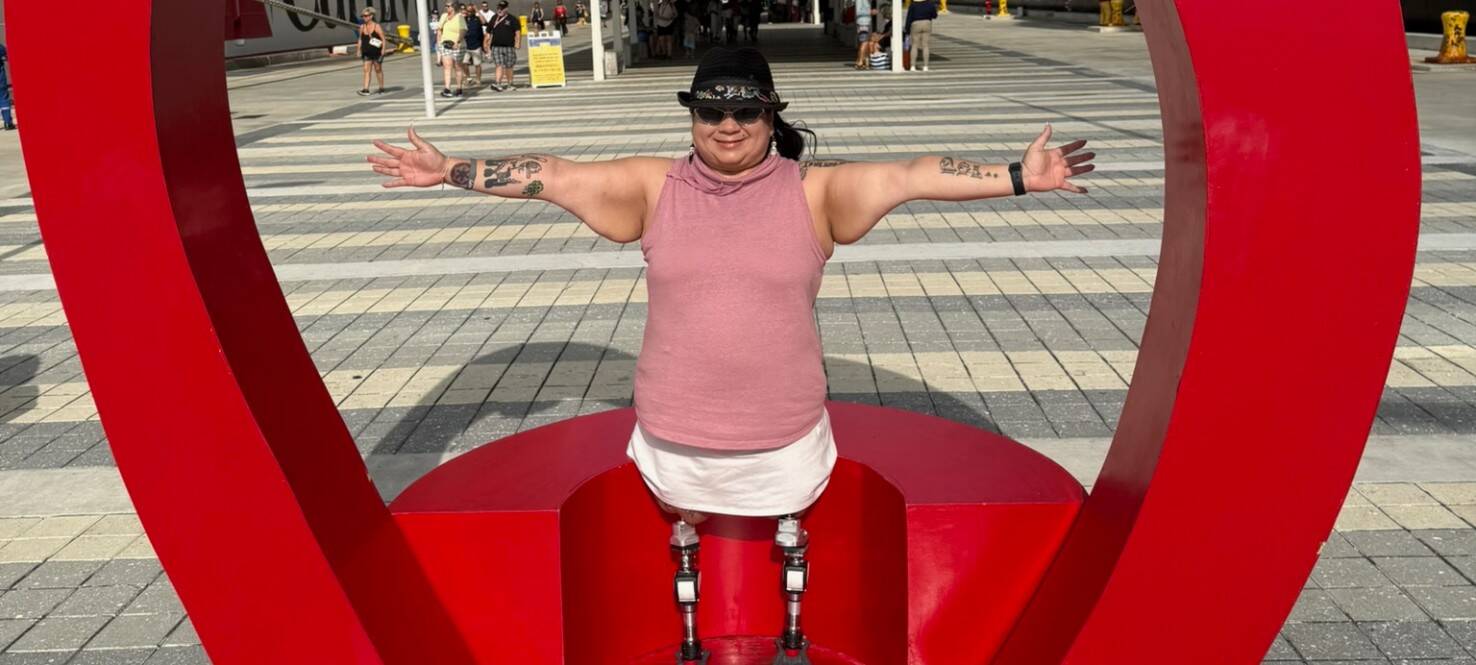
The gym buzzes with energy. The steady hum of treadmills, the clank of weights meeting metal and the rhythm of music pulsing through the speakers. Amid strangers breaking a sweat, bilateral amputee Vaughan DeBarr stands with help from her two prosthetic legs.
Glancing at the mirrors reflecting the sea of motion around her, DeBarr spots two young men who are focusing on three exercises: the squat, bench press and deadlift. The two young athletes are members of a local powerlifting team.
Curious to learn more, DeBarr asks the men about the sport and shares that it is something she wants to try.
Their immediate response: There’s no way she can do it.
Though the interaction lasted only a few minutes, it has stayed with DeBarr. She remembers it clearly because it was the moment she decided, without hesitation, that she would learn the sport of powerlifting.
“I go through life with the mindset that no matter what happens to you, you have two choices: You can either stand up or lie down,” DeBarr said. “If you lie down, eventually people are going to start stepping over you and then on you. But if you stand up, you can start moving with the crowd and then moving ahead of the crowd.”
Now 53, DeBarr reflects on how that mindset took shape early in her life.
At age 7, she was attacked by a dog. The injuries she suffered worsened over time, ultimately leading to the surgical removal of her left leg in 2013 at the age of 40. Seven years later, complications from overcompensation resulted in the amputation of her right leg.
Since then, she has spent years adding extra time to her mornings just to get ready, often budgeting at least an additional half-hour to put on her prosthetic legs.
“It’s a whole process when you have sockets,” she said. “You must put on a liner, then get the socket on and adjust everything properly. On top of that, there’s a very heavy weight to the socket.”
While the routine itself was time-consuming, the most difficult part remained the strain on DeBarr’s upper body, with each prosthesis weighing about 8 pounds. That ongoing discomfort eventually led her to explore a procedure that would change the way her prosthetics attach to her limbs.
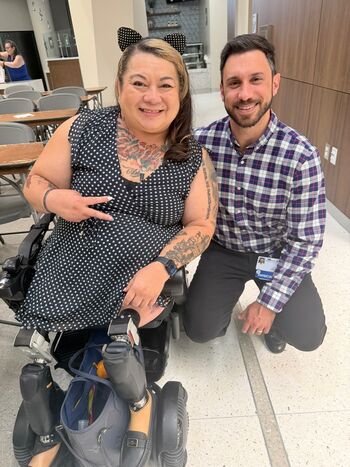
DeBarr and Lazarides highlight the benefits of osseointegration, a procedure that has helped DeBarr regain mobility and reduce discomfort.
A Better Option
Osseointegration is a procedure that attaches a prosthetic limb directly to the remaining bone. Compared to traditional socket-based prosthetics, it can provide more stability, support and functionality for patients.
Moffitt Cancer Center is one of only three centers in Florida offering the Osseoanchored Prostheses for the Rehabilitation of Amputees Implant System — the only boneanchored prosthesis approved by the U.S. Food and Drug Administration.
Even with modern reconstruction, some patients with cancer ultimately require amputation, explains Alexander Lazarides, MD, an orthopedic oncology surgeon and musculoskeletal oncologist at Moffitt. For patients with sarcoma specifically, 90% receive modern limb salvage surgery and 10% still require amputation.
“This program was especially important at Moffitt because our patients often have complex oncologic histories, including prior surgery, radiation, reconstruction and challenging soft-tissue conditions,” he said. “They need a multidisciplinary team that understands both cancer care and highly specialized limb reconstruction.”
Because Moffitt is on a short list of centers in the state offering this technology, Lazarides says it was important to provide this procedure to amputees with any etiology, whether oncologic or traumatic.
In 2024, DeBarr was the first patient to undergo the procedure at Moffitt.
A Multistep Process
Osseointegration is completed in phases.
The process begins with the placement of a titanium implant into the patient’s remaining bone.
For each procedure, Lazarides works hand in hand with Marten Basta, MD, an assistant member in the Reconstructive Oncology Program at Moffitt.
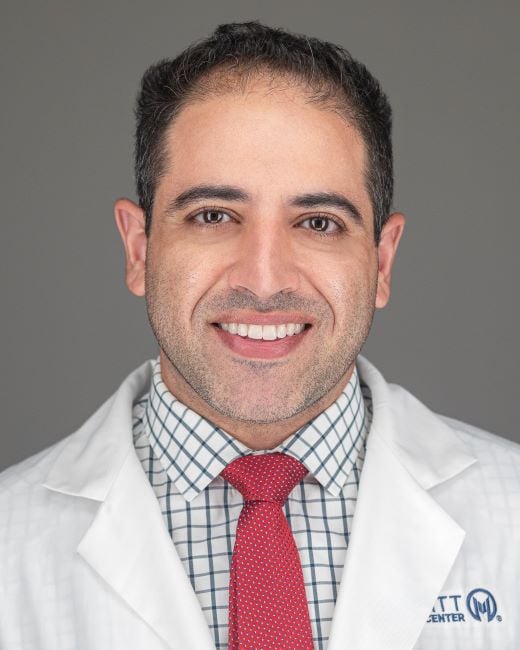
“Our reconstructive team focuses on creating the soft tissue platform to optimize the interface between the hardware and the external appliance that's connected to the hardware,” Basta said. “We’re doing a lot of work in terms of reshaping the muscle in the affected extremity, as well as tightening the skin envelope. We create this kind of skin graft-like interface for the hardware to be covered with.”
During the initial healing phase, the body responds by forming blood clots around the implant site. Over the following three to six months, new bone tissue grows and gradually bonds to the implant, incorporating it into the skeleton.
As healing continues, the bone remodels and strengthens around the implant, creating a stable connection capable of supporting weight and movement. Once the implant is fully integrated, it can be used to support the prosthetic limb.
Patients like DeBarr then participate in 12 weeks of rehabilitation before returning to their normal daily activities with the new prosthesis.
By connecting the prosthesis directly to the bone, it can feel more like an extension of the patient’s body.
“For a patient like Vaughan DeBarr, the benefit of osseointegration is not simply that the prosthesis may be a bit lighter,” Lazarides said. “It is that she no longer has to carry the additional bulk, pressure, heat and movement of a large socket and suspension system around her residual limb.”
Who Is a Good Fit?
Several factors are considered when determining whether a patient is a good fit for osseointegration, including overall health, weight, age and whether the patient is currently undergoing systemic treatments that may increase the risk of infection.
Osseointegration is considered generally effective, with success rates ranging from 80% to 95%, depending on factors such as bone quality and postoperative rehabilitation and care.
Since DeBarr’s case, 11 other above-the-knee amputees have undergone the procedure at Moffitt, including four whose amputations were related to cancer.
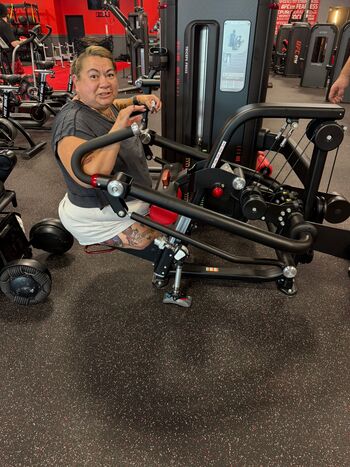
DeBarr continues to pursue her passion for working out, demonstrating her strength and determination.
Life After Osseointegration
Now, when DeBarr looks in the mirror at the gym, she doesn’t see two young men powerlifting. She sees herself.
Since becoming a bilateral amputee, DeBarr has competed in multiple powerlifting competitions and has no plans to slow down. The biggest difference since she underwent the osseointegration procedure is how she feels.
“Before this procedure, there was so much weight I had to carry on my upper body, and I was constantly in pain,” DeBarr said, noting that her new prosthetics only weigh about 1 ½ pounds each. “Now, it’s a lot easier for me to get around, and my upper body isn’t constantly in a state of exhaustion. It also only takes me a few seconds to attach my prosthetics in the morning and I’m ready to go.”
She also feels that newfound weightlessness in all her other favorite activities, like writing and spending time with loved ones.She has authored a book about her life journey, hoping to inspire and support others navigating limb loss.
“My biggest passion is helping other amputees in the community,” she said. “I like to mentor and talk to them about how they can overcome both the mental and physical aspects of amputation and make sure they have support.”
Through her advocacy, DeBarr hopes to show others that challenges do not have to define their future.
“Through my own journey, I have healed from within and learned to love myself the way I am, and that’s what I want to encourage others to do,” DeBarr said.
 Medically reviewed by Alexander Lazarides, MD, Sarcoma Department and Marten Basta, MD, Reconstructive Oncology Department