
When to Refer a Suspected Glioma: Why Early Collaboration Matters for Both High- and Low-Grade Disease
Key Takeaways for Busy Providers
- Refer suspicious brain lesions early, regardless of presumed grade
- Enhancing or non-enhancing lesions with neurologic symptoms warrant urgent evaluation
- Low-grade gliomas benefit from early intervention, not observation alone
- Initial surgical approach impacts survival, function, opportunities for clinical trials and future treatment options
- Moffitt provides rapid access, advanced surgical planning and co-management options
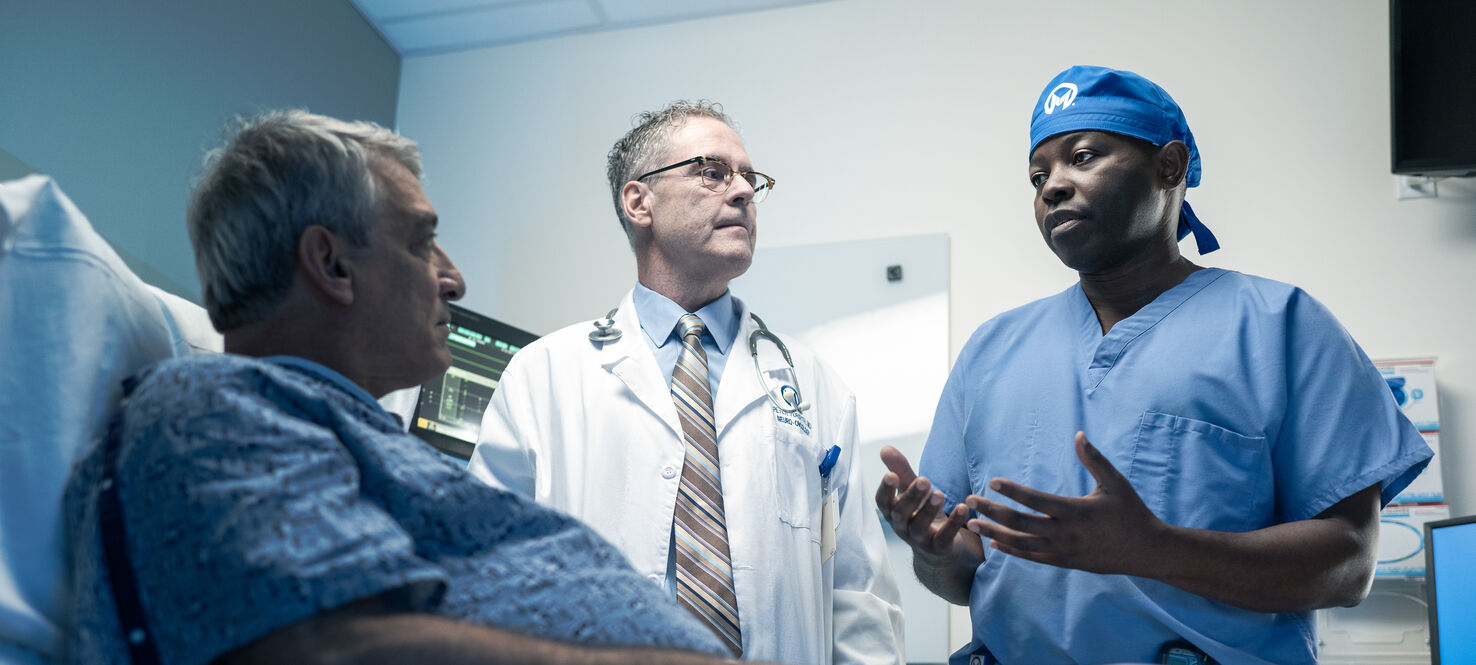
In glioma care, the question is no longer whether a lesion appears "urgent", but rather whether early specialist input could preserve treatment options that might otherwise be lost. The first treatment decision often carries the greatest long-term impact, shaping survival, neurologic function and eligibility for clinical trials or future therapies.
In many cases, there is time to pursue a multidisciplinary review at Moffitt before committing to a surgical approach. That early collaboration can help optimize outcomes across both low- and high-grade glioma care.,
The Evolution of Low-Grade Glioma Management
The management of low-grade gliomas has changed substantially over the past 5 years. Observation, once commonly employed as the default approach, is no longer appropriate in the era of molecular classification and advanced surgical techniques.
Molecular markers such as IDH-mutation status, 1p19q codeletion status, MGMT promoter methylation and other genetic alterations now play a central role in prognostication and treatment planning. These markers may identify patients who are likely to benefit from early surgical intervention versus medical treatment with the newly approved drug targeting grade 2 astrocytomas or oligodendrogliomas harboring the IDH mutation.
At the same time, advances in neurosurgical techniques have expanded treatment possibilities for tumors previously considered inoperable because of eloquent brain locations. Increasing evidence demonstrates that maximal safe resection can improve survival, preserve neurologic function, eliminate the need for adjuvant therapy and improve overall survival. Functioning-preserving techniques like awake craniotomies, cortical tractography mapping, intra-operative speech and motor mapping and intra-operative MRI-guided surgeries can expand surgical eligibility for patients once deemed inoperable.
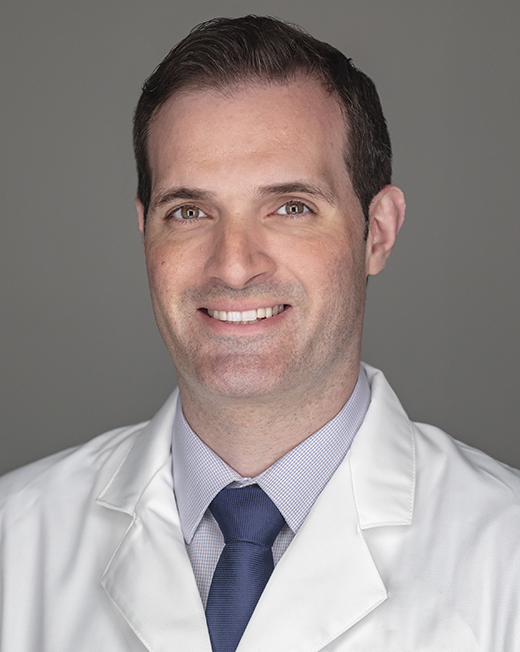
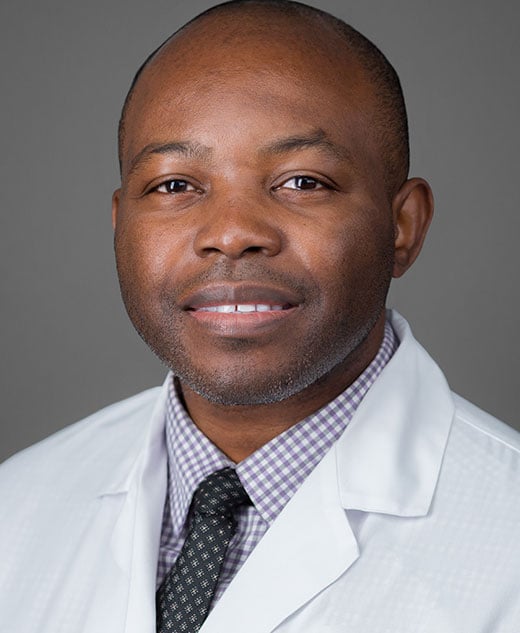
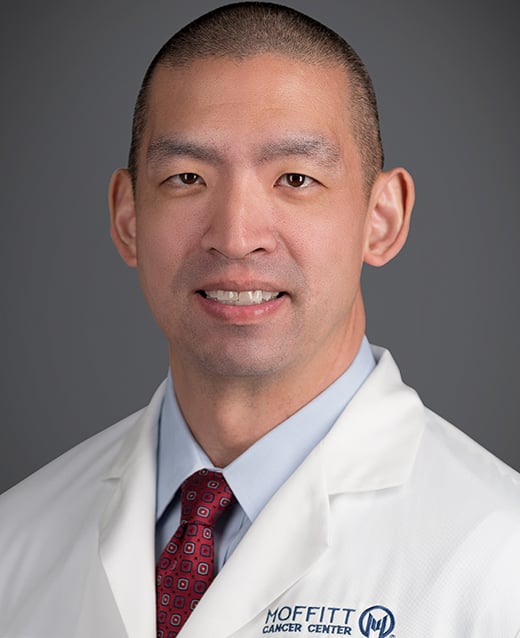
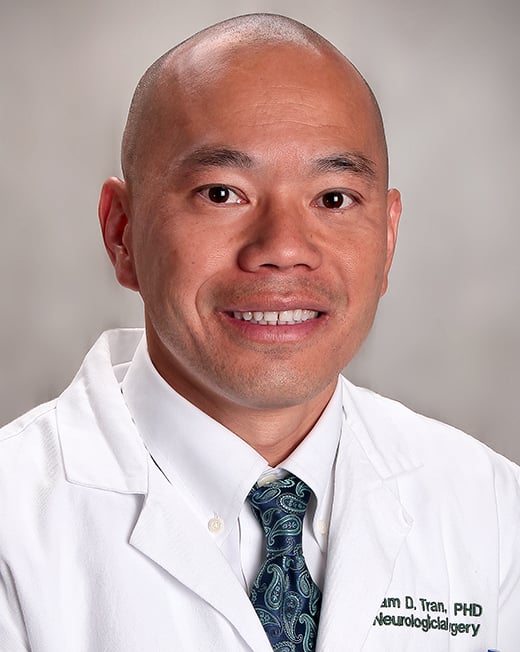
Moffitt Cancer Center has four neuro-oncology fellowship-trained neurosurgeons, Dr. Arnold Etame, Dr. Beer Furlan, Dr. James Liu and Dr. Nam Tran, who routinely perform advanced and complex procedures for deep-skull base and eloquent-area tumors.
-
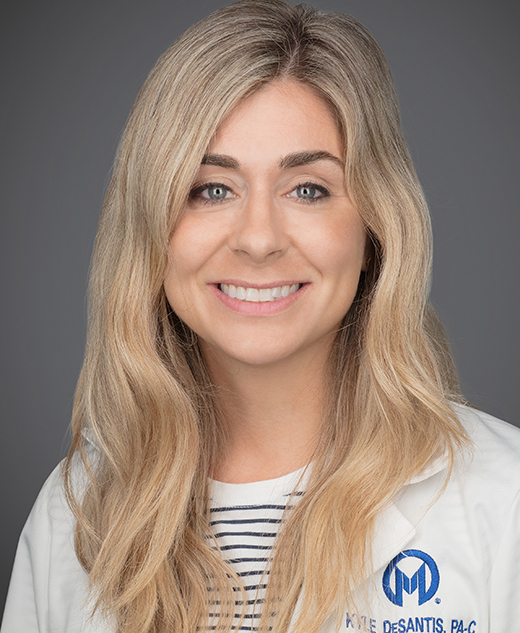
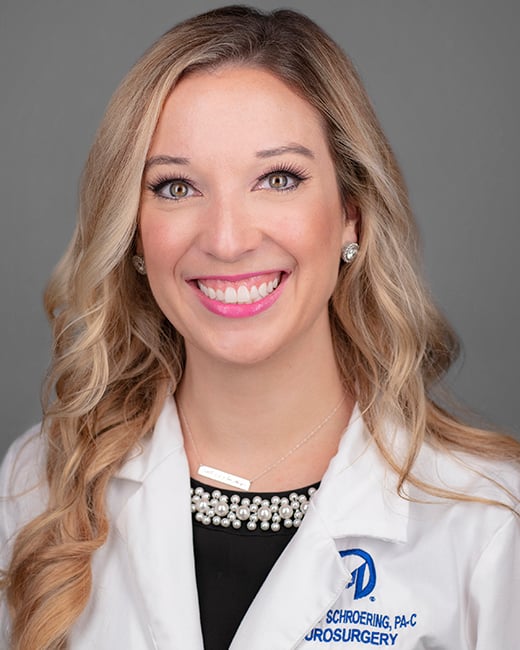
Moffitt's Neurosurgery Team
Recognizing When to Loop in Neuro-Oncology Expertise
Certain imaging findings and clinical presentations should prompt expedited consultation:
- Enhancing lesions on MRI
- New-onset seizures
- Focal neurologic deficits
- Rapid cognitive or functional decline
These patients benefit from streamlined pathways that rapidly coordinate imaging review, surgical evaluation, adjuvant treatment planning and clinical trial eligibility assessment. Even in urgent situations, there is often time for expedited multidisciplinary discussion before surgery to ensure the initial treatment strategy aligns with the broader clinical picture. Moffitt accommodates urgent consultations and can facilitate ER transfers when time-sensitive evaluation is necessary.
Suspected low-grade gliomas also deserve early attention, even when in clinically stable patients. Several scenarios benefit from early specialist referral and review:
- Lesions in or near eloquent brain regions
- Younger patients, where long-term functional outcomes are especially important
- Diagnostic uncertainty on imaging
Low-grade does not necessarily mean low-risk. Early strategic intervention can change the disease course in ways that delayed referral cannot replicate.
How Early Treatment Decisions Shape Long-Term Outcomes
How a glioma is managed at diagnosis can significantly influence future treatment options. For example, resection without advanced functional mapping in eloquent areas may leave patients with permanent deficits that limit candidacy for future interventions. The negative impact becomes more apparent when delayed referrals allow presumed low-grade lesions to progress beyond the point where complete resection remains feasible. The challenge compounds when treatment decisions are made before molecular characterization and approaches are not fully aligned with disease-specific strategies.
Integrated molecular neuropathology, available at Moffitt, helps ensure that IDH mutation status, MGMT methylation and other genomic markers inform the treatment plan from the outset rather than becoming an afterthought once a surgical course is underway.
Consider a patient with a suspected low-grade glioma near the eloquent cortex. Resection without functional mapping or intraoperative imaging risks permanent deficits or incomplete resection; wjhereas, early referral for advanced surgical planning could allow for maximal safe resection with preservation of neurologic function.
Early strategic planning is critical. Fragmented care pathways can delay coordinated, multidisciplinary therapy that improves outcomes, limiting access to specialized tools and techniques when they matter most.
Moffitt’s Collaborative Approach to Glioma Referrals
The Neuro-Oncology Program at Moffitt was built around accessibility, partnership and coordinated multidisciplinary care. For patient with suspected high-grade disease, the team offers priority scheduling that moves patients rapidly from imaging through surgery to adjuvant therapy when indicated. Prompt intervention impacts outcomes in glioblastoma and the streamlined pathway reflects that urgency.
Complex cases often require expertise beyond standard benefit from specialized expertise that extends beyond standard resection. Our neurosurgical team of highly-trained and qualified doctors bring over 50 years of neurosurgical experience to even the most challenging presentations.
Patients with recurrent disease can access multidisciplinary review for:
- Re-operation
- Clinical trial eligibility
- Targeted focal therapies
- Integrated molecular neuropathology
- Personalized cancer care
The program emphasizes partnership with community oncologists and physicians. A direct access line allows referring physicians to discuss cases and review imaging with the neurosurgical team before committing to a treatment path. For patients who move forward with care at Moffitt, co-management options ensure they can return to their community physicians for long-term follow-up or adjuvant care, when appropriate. When treatment closer to home makes more sense, secure imaging review provides specialist input without disrupting established care relationships.
The Case for Early Collaboration
When imaging raises concern or a diagnosis remains uncertain, there is time to make the call to Moffittl before committing to a surgical path. A conversation with Moffitt's neuro-oncology team before that first treatment decision is made often preserves options for the patient in the long term.
Our team is available to discuss cases, review imaging and coordinate expedited evaluation, including transfer through established ER pathways for glioma patients who need urgent access. Community physicians remain central to the care relationship throughout, with co-management options ensuring patients can return home for follow-up once specialist input has shaped the plan.
To refer a patient for a glioma consultation, start the process using our online form or reach out to our Liaison team for assistance at Physician.Relations@Moffitt.org.

 Medically reviewed by Dr. Arnold Etame, neurosurgeon, Neuro-Oncology Program.