Skip to nav Skip to content

check mark symbol Medically reviewed by Jhanelle Gray, MD, Chair, Thoracic Oncology Program.

Lung cancer is the leading cause of cancer death in the United States, yet many people who could benefit from lung cancer screening never receive it. In fact, only about 18% of individuals who are eligible for lung cancer screening get screened. 

There are many factors that lead to a person not being screened. They may not know they are eligible, have concerns about what screening could find, or face socioeconomic barriers such as fear, smoking-related stigma and anxiety about a lung cancer diagnosis. 

Moffitt Cancer Center is helping to remove some of those barriers by bringing lung cancer screening directly into communities. 

Most people with a smoking history over 50 qualify for lung cancer screening. Moffitt's screening program is among the best in the nation and is available to all - no referral needed.
Schedule a Screening

How Moffitt’s Mobile Lung Cancer Screening Program Works 
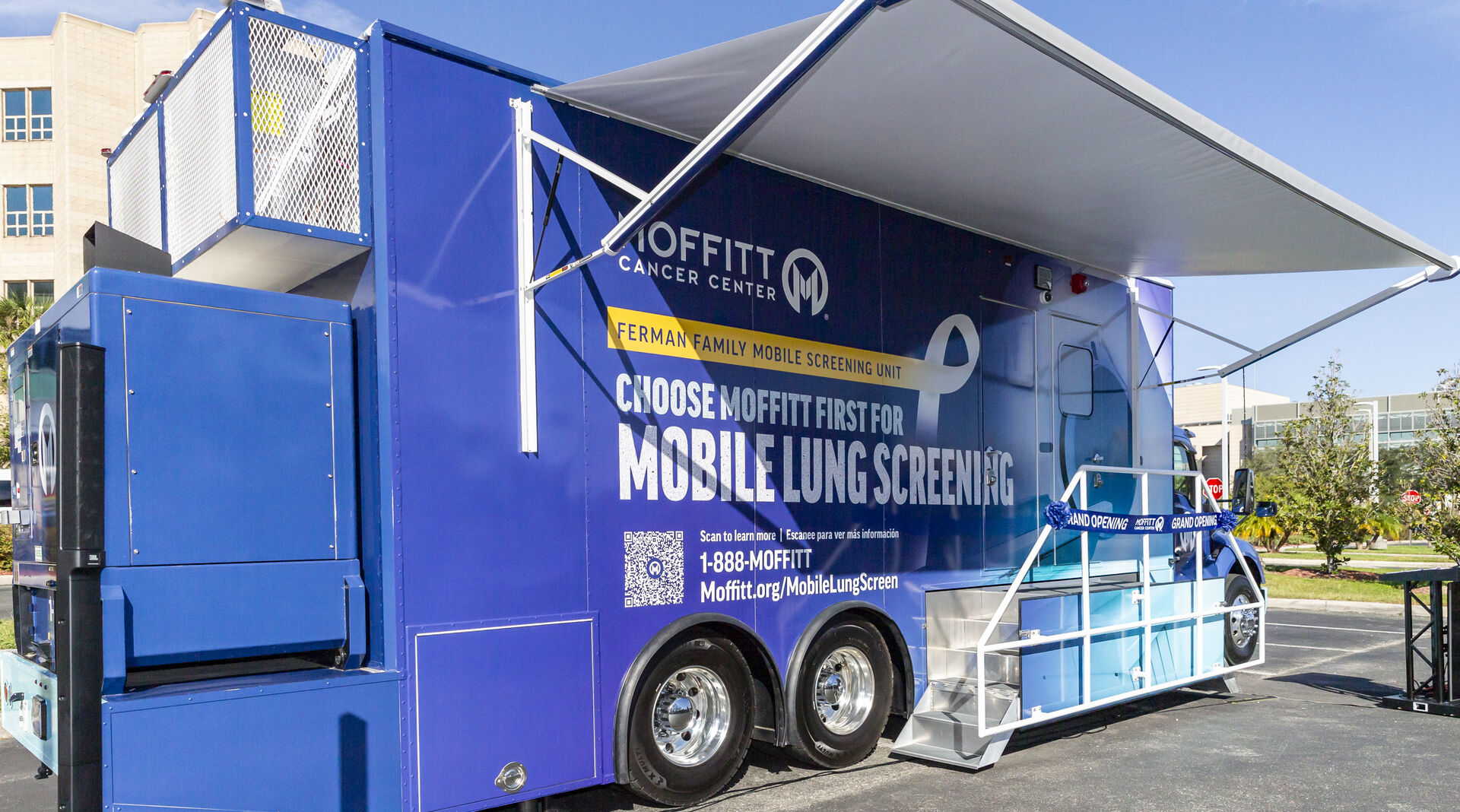
Mobile Lung Screening Bus

Moffitt's Ferman Family Mobile Lung Screening Unit is Florida's first mobile lung cancer screening unit. Equipped with a low-dose computed tomography (CT) scanner, it travels throughout Florida to bring screening closer to where people live and work. 

The program does more than bring screening technology into communities. Through educational events, health fairs, employer wellness programs and partnerships with local organizations, Moffitt helps the community understand who may qualify for screening, what to expect and how to take the next step. These efforts help address barriers such as limited awareness and uncertainty about the screening process. 

The program's new Every Mile Matters campaign reflects this commitment. Each trip into a community creates an opportunity to raise awareness, answer questions and help eligible individuals take a step toward early detection. 

Since launching in October 2024, Moffitt's Mobile Lung Screening Program has screened more than 500 individuals. The program's impact extends beyond screening to helping people feel informed and supported as they take the next step in their health care. 

  • Person

    18% of individuals

    who are eligible for a lung cancer screening get screened

  • Check mark

    500+ individuals

    have been screened since the program launched in October 2024

Who Should Get Lung Cancer Screening? 

Lung cancer may not cause noticeable symptoms in its early stages. A low-dose CT scan can detect changes in the lungs, including lung nodules, even before symptoms develop. Finding lung cancer early may give patients more treatment options and improve their chances of a better outcome.  

Lung cancer screening is not recommended for everyone. It is intended for those who have a higher risk of developing lung cancer.  

Moffitt's screening program follows national guidelines. Screening may be recommended for people who meet the following criteria: 

  • Are 50 years old or older 
  • Currently smoke or have smoked in the past 
  • Have a smoking history of at least 20 pack-years 
  • Do not have symptoms of lung cancer 

A pack-year measures a person's smoking history. It is calculated by multiplying the number of packs smoked per day by the number of years smoked. For example, smoking one pack a day for 20 years equals 20 pack-years. 
 
Those who have symptoms, such as coughing up blood or unexplained weight loss, should talk with a health care provider about diagnostic testing instead of waiting for a screening appointment. 

Through education and community partnerships, we can help more people understand their risk and the importance of early detection.
Jhanelle Gray, MD
Chair, Thoracic Oncology Program

What Happens During a Lung Cancer Screening?

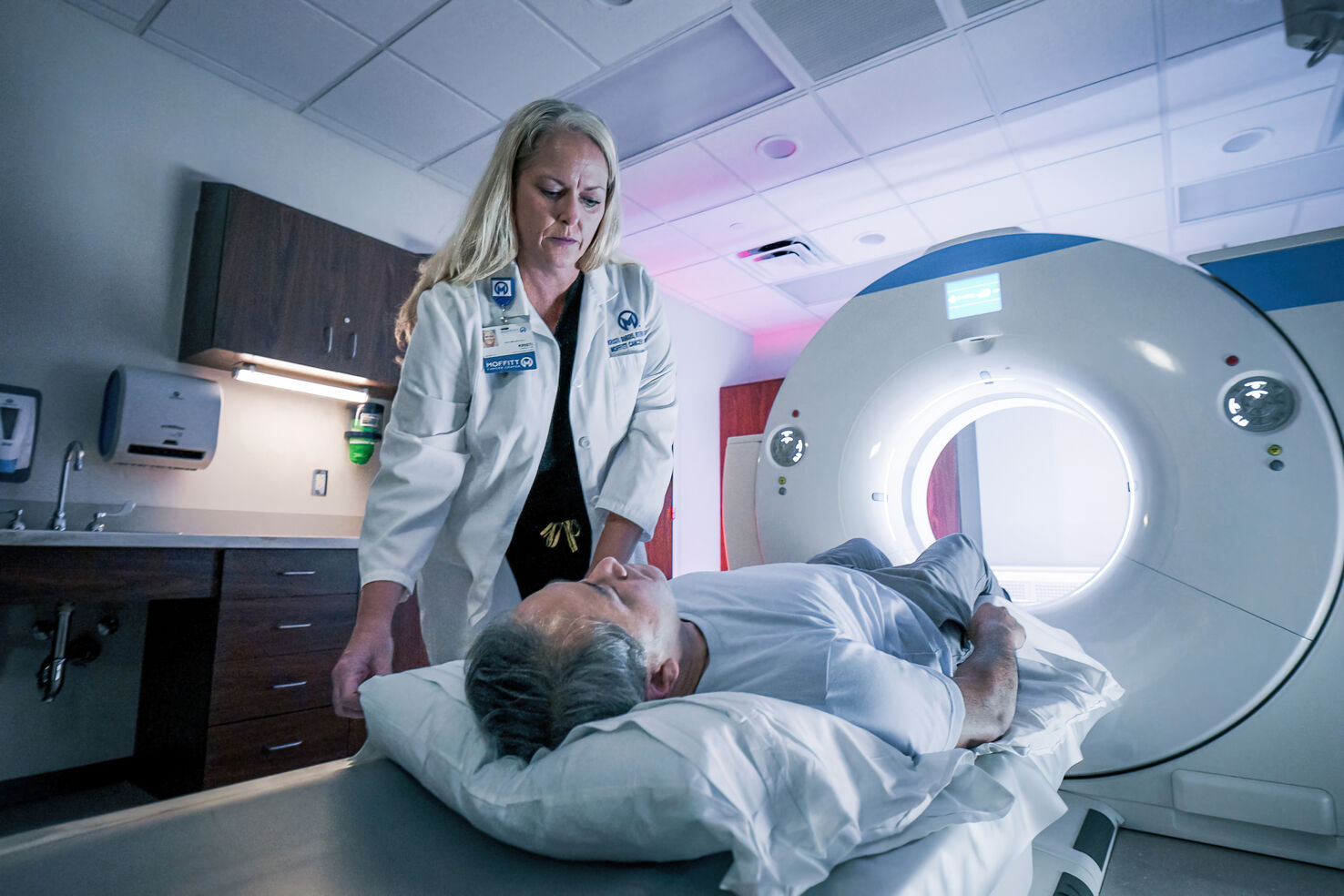
Patient undergoing a lung screeningLung cancer screening uses a low-dose CT scan to create detailed images of the lungs. Unlike a conventional CT scan, a low-dose CT scan uses less radiation to produce these images. It can help detect lung cancer at an early stage and identify lung nodules that may need further evaluation. 

The scan itself is quick and painless and does not require needles or special preparation. At Moffitt's mobile screening events, the scan takes about a minute, and the full visit typically lasts 10 to 15 minutes. 

Finding a lung nodule does not necessarily mean someone has lung cancer. Most lung nodules are not cancerous, but some may need follow-up to determine whether additional evaluation is necessary. 

What Happens After an Abnormal Lung Cancer Screening? 

At Moffitt, a team of experts reviews abnormal screening results and help guide patients through the next steps, which may include additional testing or monitoring. 

Patients may also receive expedited access to Moffitt's lung cancer care team, along with tobacco treatment and smoking cessation resources. 

Moffitt's Lung Cancer Early Detection Center brings together three coordinated clinics focused on early lung cancer detection and care: the Lung Screening Clinic, Lung Nodule Clinic and Lung Surveillance Clinic. 

For people with lung nodules, Moffitt's Lung Nodule Clinic provides evaluation and recommendations for follow-up care. Monitoring can help determine whether additional testing or treatment is needed. 

This coordinated approach helps patients understand their results and the next steps in their care. 

Whether through screening, education or connections to follow-up care, Moffitt's Mobile Lung Screening Program helps people take informed steps toward protecting their health. 

Ready to Take the Next Step?  

Visit Moffitt's Mobile Lung Screening page to find an upcoming mobile screening location and request an appointment. No referral is required. 

To learn more about lung cancer screening and treatment at Moffitt, call 1-888-663-3488 or submit a new patient registration form.